
Can You Learn Two Languages at the Same Time?
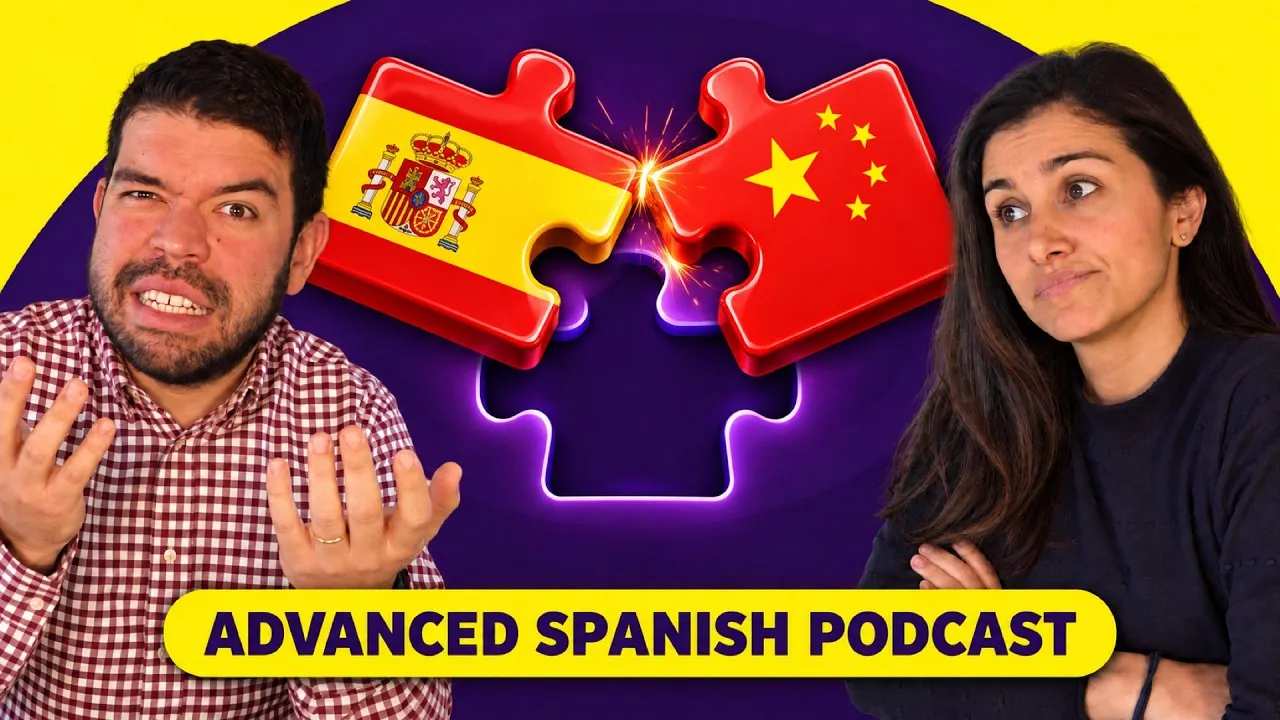
Spanish plus another language at once? Our hosts say you can, but it costs time. When it helps, when it confuses, and who it suits.
WorldsAcross team · November 14, 2026
In this article · 6 sections
"My Spanish is finally going somewhere. Should I add Portuguese while I'm at it? Or French? Or Greek?" If you've had that thought, you're in good company. On the WorldsAcross Spanish Podcast, the hosts admitted it has crossed all of their minds.
They even have a name for the feeling: the polyglot bug bites. You reach a conversational level in one language and think, "Me voy a comer el mundo." I'm going to eat the world. Mandarin, Italian, Portuguese, all of it. So can you really learn two languages at the same time? Here's what they said.
Vicky's Dutch experiment
Vicky has lived this one. She went to the Netherlands to learn English, and while she was there she thought, "I should at least try Dutch." So she signed up for some very basic classes.
It was hard. Dutch looked nothing like the languages she knew, and there was nothing to hold on to. And she wasn't just learning English, either. She was going to school there, taking physics, chemistry and math in English. Her brain was tired. Physics was already a struggle.
So she made a call: focus on English. Her reasoning was simple. "If I came here to learn English, don't leave with neither. Leave with English, at least." El holandés puede esperar. Dutch can wait.
Did she regret it? A little. By the end of her year, she could follow some of what her friends said to each other in Dutch, and join in, in English. She wonders what a bit more effort would have done. There was another catch, too: in the Netherlands, almost everyone switches to English with you. She was never really forced to use Dutch.
One host offered a great expression here: "con el diario del lunes," literally "with Monday's newspaper." It's what you'll hear in Argentina for hindsight. With Monday's paper, it's easy to say who should have won Sunday's game.
Another host had a similar story: starting French while their English was already conversational, and never dropping English. The French? It didn't last long. Struggle is normal here. It happens to almost everyone who catches the bug.
Does learning two languages hurt?
The hosts brought in a study that compared adults learning one language with adults learning two. As they described it, the people learning two didn't fall behind in the first one, though their fluency went up and down a bit more along the way. Their quick reading: no hay evidencia de que te haga daño. There's no evidence it hurts you.
But they didn't stop there. One host asked the right question: what stage were those learners at? Starting two languages at a beginner level is one thing. Juggling a conversational language and a brand-new one is another.
The real cost is time
Juan put it plainly. Yes, you can. "Pero tiene un costo." But it has a cost. And he didn't mean money. "No necesariamente monetario, sino en tiempo." Not necessarily money, but time.
Think about it. Say you have two hours a day for languages. With one language, Spanish gets both hours. With two, maybe each one gets an hour. Your return on each hour of Spanish is smaller, and the whole process stretches out.
And a longer process carries more risk. Life happens along the way: a new job, a move, a busy season at work. The longer the road, the more chances something knocks you off it. Learning Spanish to a conversational level already takes most people years, not weeks. Splitting your time means those years get longer.
Similar languages or very different ones?
This is where the hosts split.
Team similar. Spanish and Portuguese, or Spanish and Italian, share a lot. Words carry over. Structures look familiar. One host said French helps them decode how Spanish uses the subjunctive, because the structure is so close. Another pointed out that if your goal is conversation, a bit of mixing isn't a disaster. It can still help you get your message across. Hello, portuñol, the friendly mix of Portuguese and Spanish you hear along the borders.
Team different. Osmel went the other way: Spanish and Russian, or Spanish and Mandarin. His intuition was that very different languages are less likely to get mixed up. Then came his analogy. Learning two different languages is like training upper body one day and lower body the next. You're not overloading the same muscle. "No se canibalizan entre sí." They don't cannibalize each other. He was clear it's a hypothesis, not science.
Similar languages, as one host put it, "te puede ayudar o te puede volver loco." It can help you, or drive you crazy. They remembered a learner who would slip French words and structures into his Spanish without noticing. And they named two traps:
- Through listening: if you pour in hours of both, the sounds can blend, and your pronunciation picks up a bit of each.
- Through comparing: if you study the grammar side by side, your memory can betray you. Wait, was that rule Spanish or Portuguese?
The idea of listening to an hour of Spanish and then an hour of Portuguese got one clear reaction from the table: that sounds really confusing.
Depende: when you start the second one
And then Osmel landed it. Depende. It depends on when.
- Both from zero, at the same time? Then pick two very different languages, so they don't fight. Honestly, Osmel wouldn't do it at all. Another host joked it would take a serious paycheck.
- Already conversational in one? Then a similar language is a great next step. Going from Spanish to Portuguese, you start with terreno ganado, ground already won. And because you keep comparing, it can even strengthen your Spanish.
The hosts also noticed who actually does the "two at once" thing. Mostly people who need it for work: someone at an international organization, on a support team, a language academic, a diplomat. If you're learning for fun, in your free time, splitting it two ways is a much harder sell.
One more honest point: being a beginner is fun. It's like a new hobby. You learn to say "cheers" in Greek and repeat it all day. That rush is real motivation. It just doesn't guarantee you'll get there.
Before you add a second language
Ask yourself three questions:
- Can I already hold a real conversation in Spanish, or am I still building the base?
- How many hours a week do I really have, and am I fine with each language moving at half speed?
- Is the new language close to Spanish, or far from it?
If your answer to the first one is "not yet," that's your answer for now. Get Spanish conversational first, then let the second language ride on it. For a realistic timeline, read how long it really takes to learn Spanish and can you go from beginner to advanced Spanish in one year?
So, tell us: besides Spanish, are you learning another language right now? And which one would you add next?
Watch the full episode on the WorldsAcross YouTube channel to hear the whole debate.