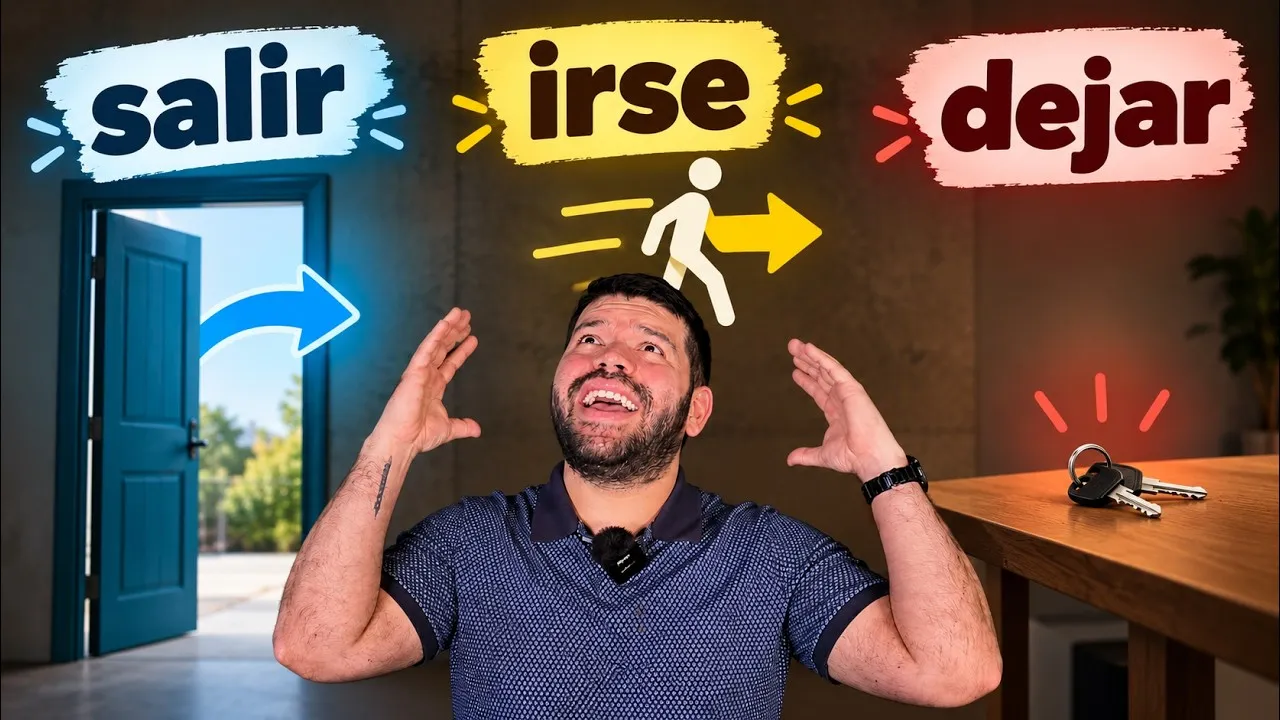
How to Say Stop in Spanish: Parar, Dejar de or Detener?
Dejar de, parar, parar de or detener? English says stop for all of them. One question tells you which Spanish verb fits.
WorldsAcross team · November 14, 2026
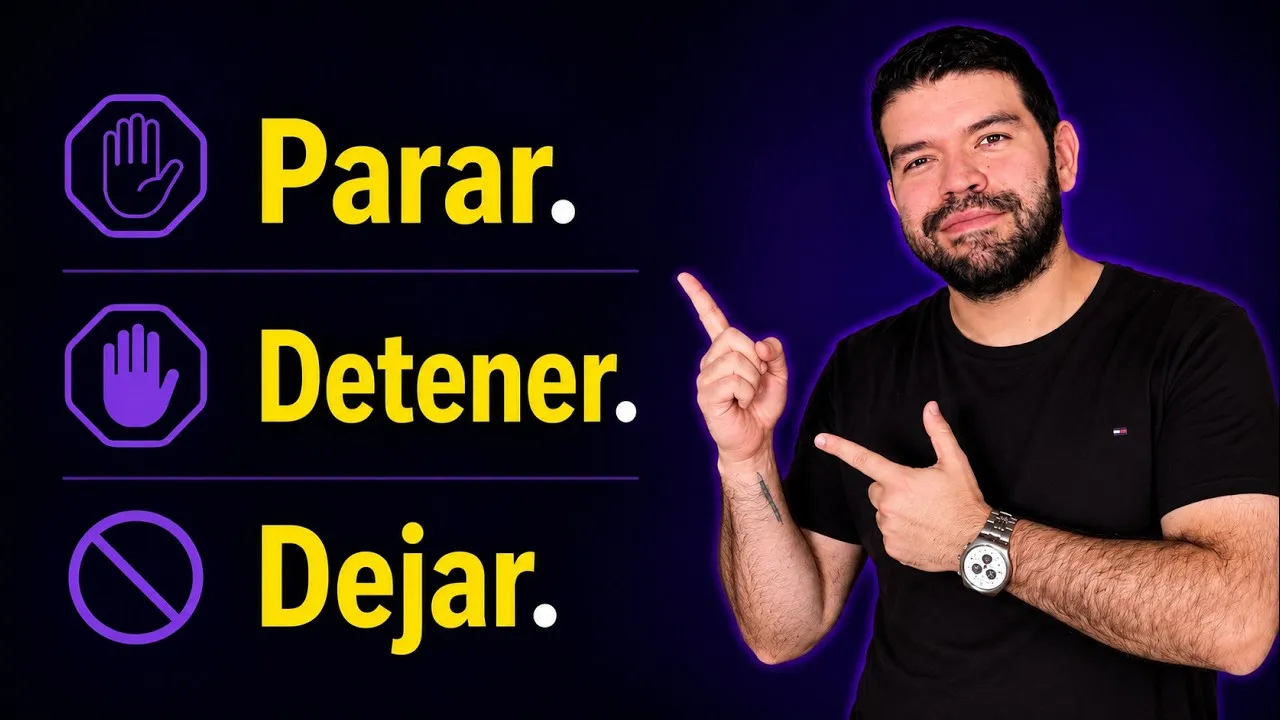
In this article · 9 sections
Dejé de fumar. El autobús para aquí. No para de hablar. La policía detuvo el coche. Four sentences. In English, every one of them uses the same word: stop.
English is happy with one verb. Spanish isn't. Good news or bad news, depending on your mood today. So which one do you use? Parar? Dejar de? Detener? This is the moment a lot of learners grab the first verb they remember and hope for the best. Chill. You don't need a table of rules. You need one question.
By the end of this lesson, you'll know how Spanish sorts every kind of "stop", and why one tiny de changes the whole sentence.
The question: what exactly is stopping?
Don't memorize stop = parar. Ask yourself: what exactly is stopping? A habit or activity? Something that moves? An action that just won't quit? Or someone else, because you're stopping them?
English hides all of that inside one word. Spanish wants you to look at the structure of the situation first.
Dejar de: an activity stops happening
When you stop doing something, Spanish reaches for dejar de + infinitive. An activity or habit was going on, and then it wasn't.
- Dejé de fumar. I stopped smoking. (Let's pretend I was a smoker. I wasn't. Just go with it.)
- Dejó de llover. It stopped raining.
- ¡Deja de gritar! Stop shouting!
- Dejaste de estudiar. You stopped studying.
Notice: dejar changes with the subject, but the second verb stays in the infinitive. Dejo de hablar, dejaste de hablar, dejó de hablar.
The trap: that tiny de
Pay attention here. Don't forget the de. Compare:
- Me dejó hablar. He let me speak.
- Dejó de hablar. He stopped speaking.
Without de, dejar + infinitive means to let someone do something. One tiny word, and you go from "he stopped talking" to "he let me talk". Learners drop that de all the time, especially when speaking fast. It happens to all of us.
Parar: something stops moving
Now imagine you're driving. You don't want to stop an activity. You want the car itself to stop moving. Here Spanish usually uses parar.
- El coche paró. The car stopped.
- El autobús para aquí. The bus stops here.
Parar can also take an object, when you're the one bringing something to a stop:
- Para el coche. Stop the car.
- Tuvieron que parar el partido. They had to stop the game.
So compare Dejé de manejar (I stopped driving, as in I gave it up, or I stopped for the day) with Paré el coche (I stopped the car). The first ends an activity. The second brings something to a halt. That's a much more useful distinction than "dejar = stop, parar = stop".
Parar de: it keeps going and going
And this is where things get interesting. Spanish also has parar de + infinitive, and it often carries a feeling: something that goes on and on and on.
- No para de hablar. She won't stop talking.
- No puedo parar de reír. I can't stop laughing.
- El bebé no para de llorar. The baby won't stop crying.
- No ha parado de llover. It hasn't stopped raining.
Notice how often it comes with no. That's the "this is never ending" flavor. With dejar de, the focus is more simply on the action no longer continuing: Dejé de fumar. Dejó de trabajar allí.
Now, honest moment. There's overlap. No deja de hablar and No para de hablar are both possible, and both are correct. These aren't two perfectly separated boxes. But the picture helps: a habit you quit, dejar de. Something running nonstop that you can't turn off, parar de.
Detener: stopping someone or something else
There's one more "stop" that English hides. Sometimes you don't stop yourself. You stop someone else. Imagine someone is about to walk out the door, and you step in front of them.
- Lo detuve. I stopped him.
- Intenté detenerlo. I tried to stop him.
- La policía detuvo el coche. The police stopped the car.
- La policía detuvo al sospechoso. The police arrested the suspect.
Detener has a stronger sense of preventing movement, of keeping something from moving on. It can sound more formal than parar, and with people it often means to detain or arrest. So context matters. For everyday stopping, parar is extremely common. If the police are involved, you'll hear detener a lot. Hopefully only on the news.
A quick note on scope: we're leaving out exclamations like ¡Basta! (Enough!) and the other jobs of dejar, like leave and let. They deserve their own lesson.
One afternoon, four kinds of stop
Let's put it all in one scene. It's Friday afternoon:
- Dejé de trabajar a las cinco. I stopped working at five. An activity ended.
- Paré el coche en la gasolinera. I stopped the car at the gas station. Movement ended.
- Mi hijo no paraba de cantar. My son wouldn't stop singing. On and on and on.
- Un policía me detuvo porque tenía una luz rota. A police officer stopped me for a broken light. Someone else stopped me.
English says stop four times. Spanish sees four different situations. Isn't it beautiful? It is. (Less beautiful for your Friday, but still.)
Recap
- To stop doing an activity: dejar de + infinitive. Dejé de fumar. Keep the de, or it becomes "let".
- To stop moving, or to bring something to a stop: parar. Para el coche. For an activity that keeps going and going: parar de. No puedo parar de reír.
- To stop someone else, often more formal or official: detener. La policía detuvo el coche. Don't memorize one translation of stop. Ask yourself: what exactly is stopping?
Your turn
Write three sentences with three different stops: one habit you'd like to quit (Quiero dejar de...), one thing that never stops in your house (... no para de...), and one sentence with parar and a car, a bus or a train. Say them out loud.
If you liked the dejar part, its cousins are waiting for you in Salir, Irse or Dejar: How to Say Leave in Spanish.
Watch Profe Juan's full lesson on how to say stop on Learn Spanish From Scratch.