
Salir, Irse or Dejar: How to Say Leave in Spanish
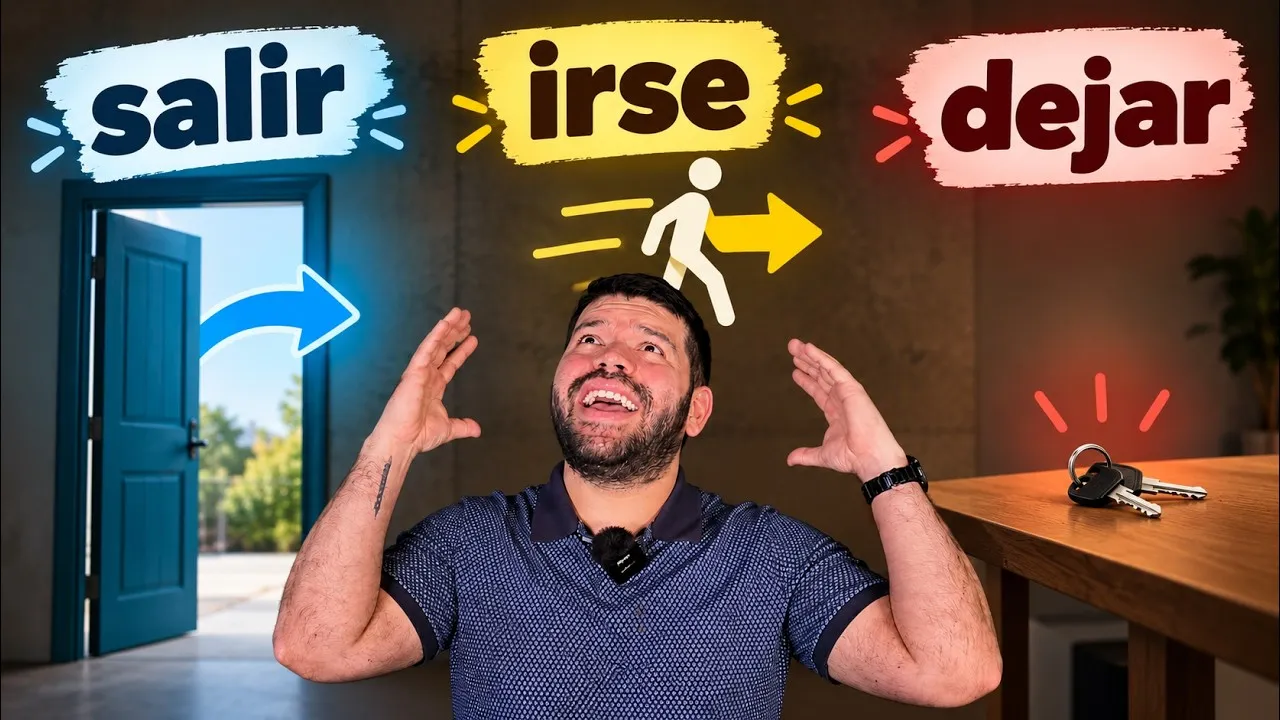
Salir is exiting a place, irse is going away, dejar is leaving something behind. One question tells you which Spanish verb fits.
WorldsAcross team · November 13, 2026
In this article · 9 sections
Salí de casa. Me fui temprano. Dejé las llaves aquí. Three Spanish sentences. In English, all three start the same way: I left.
English can use leave for all three. Spanish can't, because Spanish asks: what kind of leave do you mean? Did you leave a place? Did you go away? Or did you leave something behind? Same English verb, three different relationships.
The whole system in three lines
- Salir: to exit a place.
- Irse: to go away.
- Dejar: to leave something or someone behind.
That's pretty much it. And the question that tells you which one to use isn't "how do I translate leave?" It's this: who is leaving what? Are you exiting? Are you going away? Or is something staying behind?
Now let's make the difference feel natural.
Salir: what place are you exiting?
With salir, the focus is the place you're coming out of.
- Salí de casa. I left the house.
- Salí del trabajo a las seis. I left work at six.
- Salieron del restaurante. They left the restaurant.
- ¿A qué hora sales de casa? What time do you leave home?
Notice the structure: salir de + a place. You're moving from inside to outside. That's also why Salimos esta noche means "We're going out tonight." You're coming out of the house, out into the world.
So with salir, the key question is: what place are you exiting?
Irse: you're gone
Sometimes you don't care about the place. You care that the person is gone. That's when Spanish often switches to irse.
- Me fui temprano. I left early.
- Juan se fue. Juan left.
- Nos fuimos a las diez. We left at ten.
- ¿Ya te vas? Are you leaving already?
Look at Me fui temprano. We don't even need to say where from. The important idea is "I went away." That's why Me voy is one of the most common ways to say "I'm leaving." It's a little more dramatic, right? Picture someone grabbing a coat at a party. Bueno, me voy.
Now compare:
- Salí de la oficina. I left the office. (I exited it.)
- Me fui de la oficina. I left the office. (I went away from it.)
Be honest with yourself here: it's a very similar situation, and sometimes both work. These aren't two perfectly separated boxes. But the focus changes. Salir highlights the exit. Irse highlights the departure. If that little se in irse makes you curious, we explain its many jobs in why se is used so much in Spanish.
Dejar: something stays behind
Now the third meaning. Sometimes you aren't the one who stays or goes in the sentence. Something else stays behind. That's where dejar comes in.
- Dejé las llaves aquí. I left the keys here.
- Dejé el teléfono en casa. I left my phone at home.
- Deja la mochila aquí. Leave the backpack here.
- Dejé a los niños con mi madre. I left the kids with my mother.
You'll hear it in the car, too. ¿Me dejas aquí, por favor? Can you drop me off here? You go on driving. I stay. Same relationship: someone remains behind.
The keys stayed. I moved away. This is a completely different relationship from salir. With salir, you leave a place. With irse, you yourself go away. With dejar, you cause something or someone to remain behind.
The trap: leave equals salir
This is where many learners get stuck. You learn early that leave is salir, and then one day you want to say "I left my keys" and out comes salí las llaves. It happens to all of us. But salir doesn't take the thing you left behind. The keys didn't exit anything. They stayed. So: Dejé las llaves.
The opposite trap exists too. Dejé la casa doesn't normally mean the same as Salí de la casa. Depending on context, it can mean "I left the house behind": I abandoned it, or I stopped living there. Dejar is not just another way to say you left a place. It's about what remains.
A quick check before the big scene
Try these in your head before reading the answer. You walk out of the cinema: salí del cine, because there's a place you exit. Your friend disappears from the party without saying goodbye: se fue sin despedirse, because what matters is that he's gone. You forget your umbrella at a restaurant: dejé el paraguas en el restaurante, because the umbrella stays behind. Three situations, one question each time: who is leaving what?
One morning, three verbs
Imagine the situation. It's 8 a.m. You walk out of your house. You go to work. But your keys stay on the table. Spanish describes each part differently:
- Salí de casa a las ocho. I left the house at eight. Focus: the place I exited.
- Me fui al trabajo. I went off to work. Focus: my departure.
- Dejé las llaves en la mesa. I left the keys on the table. Focus: what stayed behind.
English can use leave three times. Spanish sees three different relationships. Isn't it beautiful? It is.
We're leaving a couple of cousins out on purpose: quedarse (to stay, which has its own tricky neighbors) and dejar de + infinitive, as in Dejé de fumar (I quit smoking). They deserve their own lesson.
Recap
- Leaving a place: salir. Salí de casa.
- Going away: irse. Me fui temprano. Me voy.
- Leaving something behind: dejar. Dejé las llaves aquí. Dejé el pasado atrás (a little dramatic, too). Don't memorize leave = salir. Ask yourself: who is leaving what?
Your turn
How would you say "I left work early and left my phone there"? You'll need two different verbs. Write it down or say it out loud before you look anything up.
Profe Juan walks through the whole morning scene in the full lesson on Learn Spanish From Scratch. Watch it above.