Sacar in Spanish: Meanings and How to Use It
Saca la basura, saqué una foto, saqué un diez. English needs take out, take, withdraw and get. Spanish sees one idea: something comes out.
WorldsAcross team · November 13, 2026
In this article · 9 sections
Saca la basura. Saqué una foto. Saqué dinero del banco. Saqué un diez en el examen. Same verb, sacar, four times. English needs four: take out, take, withdraw, get.
So what does sacar actually mean? Translating it as "to take out" only gets you so far. By the end of this article you'll have one picture that covers all of these, plus a few everyday expressions that will stop feeling random.
The core idea: something comes out
The best starting point is this: sacar means to move something out of a place, a situation or a result. Sometimes that movement is physical. Sometimes it's more abstract. That's part of the game.
So when you meet sacar, ask yourself one question: what is coming out, being obtained or being removed here?
The literal version: inside to outside
Let's start with the physical meaning.
- Saca el teléfono del bolsillo. Take the phone out of your pocket.
- Saca la basura. Take out the trash.
- Saca las llaves. Take out the keys.
- Me sacaron una muela. They pulled one of my teeth.
Something was inside. Now it's outside. The trash goes from the house to the street. The tooth comes out of your mouth (sorry). That basic idea explains much more Spanish than you might expect.
Look at Saqué dinero del banco. I withdrew money from the bank. English switches to "withdraw" here. Spanish just sees money coming out of an account, or out of the cajero, the ATM. Same movement as the trash.
From pulling out to getting a result
But then Spanish says Saqué una foto. I took a photo. Nothing is literally coming out of anything. So how does that connect?
Pay attention here. With a photo, you're producing or obtaining a result. The picture comes out of the moment. The same idea shows up with grades:
- Saqué un diez en el examen. I got a 10 on the exam.
- Saqué una buena nota. I got a good grade.
- Sacó el primer lugar. He got first place.
You take an exam, and a grade comes out of it. That's why the English jumps from "take" to "get" depending on the sentence, while Spanish stays put.
The trap: sacar is not take
This is where many learners get stuck. They see sacar una foto and decide sacar = take. Then they try to use it everywhere English uses take, and English uses take a lot. "Take the bus" is tomar el autobús, not sacar. Sacar only means take where something comes out or a result is produced.
And with photos, you'll hear more than one verb. Sacar una foto and tomar una foto are both very common, and in Spain you'll often hear hacer una foto. None of them is wrong. If you're unsure, tomar una foto or sacar una foto will be understood wherever you go.
Getting a person out of a situation
There's another very common use where English changes the verb again. This time, a person comes out of a situation.
- Me sacaron del grupo. They removed me from the group.
- Sacaron al jugador del partido. They took the player out of the game.
- ¡Sácalo de aquí! Get him out of here!
Someone was inside a situation, and now they're outside it. And you can stretch it into more abstract places:
- Ese trabajo me sacó de la pobreza. That job got me out of poverty.
- Tengo que sacarme esta idea de la cabeza. I need to get this idea out of my head.
The physical object is gone, but the direction stays: inside to outside.
Everyday expressions that suddenly make sense
Once you see that direction, some expressions stop feeling random:
- sacar tiempo to find or make time. Siempre saco tiempo para leer. I always make time to read.
- sacar una conclusión to draw a conclusion. You pull it out of the facts.
- sacar ventaja to gain an advantage. You get something out of the situation.
English keeps changing verbs. Spanish keeps returning to sacar.
One Saturday, five sacars
Imagine a normal Saturday, told with one verb:
- Por la mañana saqué la basura. In the morning I took out the trash. Physical removal.
- Después saqué dinero del cajero. Then I got money out of the ATM. Something comes out of an account.
- En el parque saqué muchas fotos. At the park I took a lot of photos. You obtain a result.
- Mi hijo me contó que sacó un diez. My son told me he got a 10. A result comes out of an experience.
- Y por la noche saqué tiempo para leer. And at night I made time to read.
Five different English verbs. One Spanish picture. Isn't it beautiful? It is.
We're leaving the more colorful idioms, like sacar de quicio (to drive someone up the wall), for another day. Get the picture first, and the idioms get much easier to decode.
Recap
- Literal: something comes out of a place. Saca la basura. Saqué dinero del banco.
- Result: something is obtained. Saqué una foto. Saqué un diez.
- Removal: someone is taken out of a situation. Me sacaron del grupo. Don't memorize sacar = take out. Ask: what is coming out, being obtained or being removed?
If you like verbs where one Spanish idea turns into a pile of English translations, read next about the most common meanings of pasar. ¿Qué pasó?, Lo pasé bien and Pásame la sal all use the same verb, too.
Your turn
Write one sentence with sacar about something you did this week: something you took out, a photo you took or a result you got.
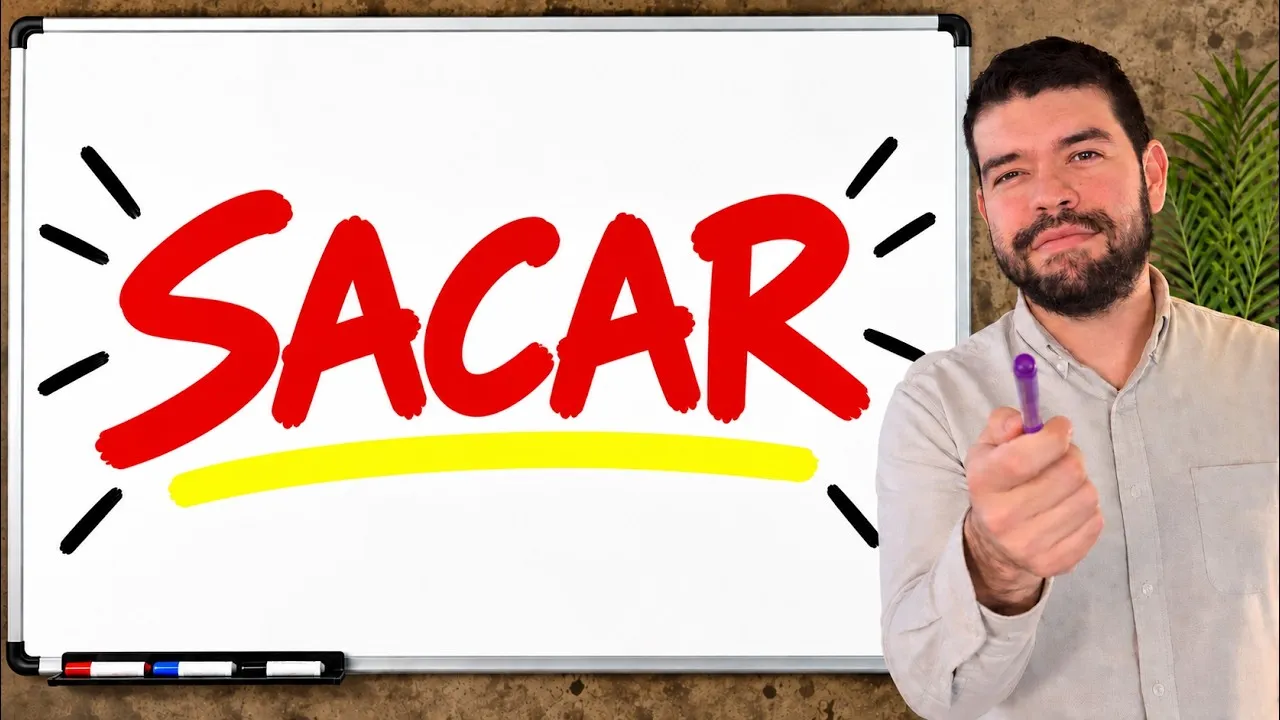
Profe Juan explains every one of these uses in the full lesson on Learn Spanish From Scratch. Watch it above.