Why Advanced Spanish Learners Don't Know Basic Words
You can debate politics in Spanish but can't tell a plumber the sink is clogged. Why it happens, and how to get around the words you don't know.
WorldsAcross team · November 14, 2026
In this article · 7 sections
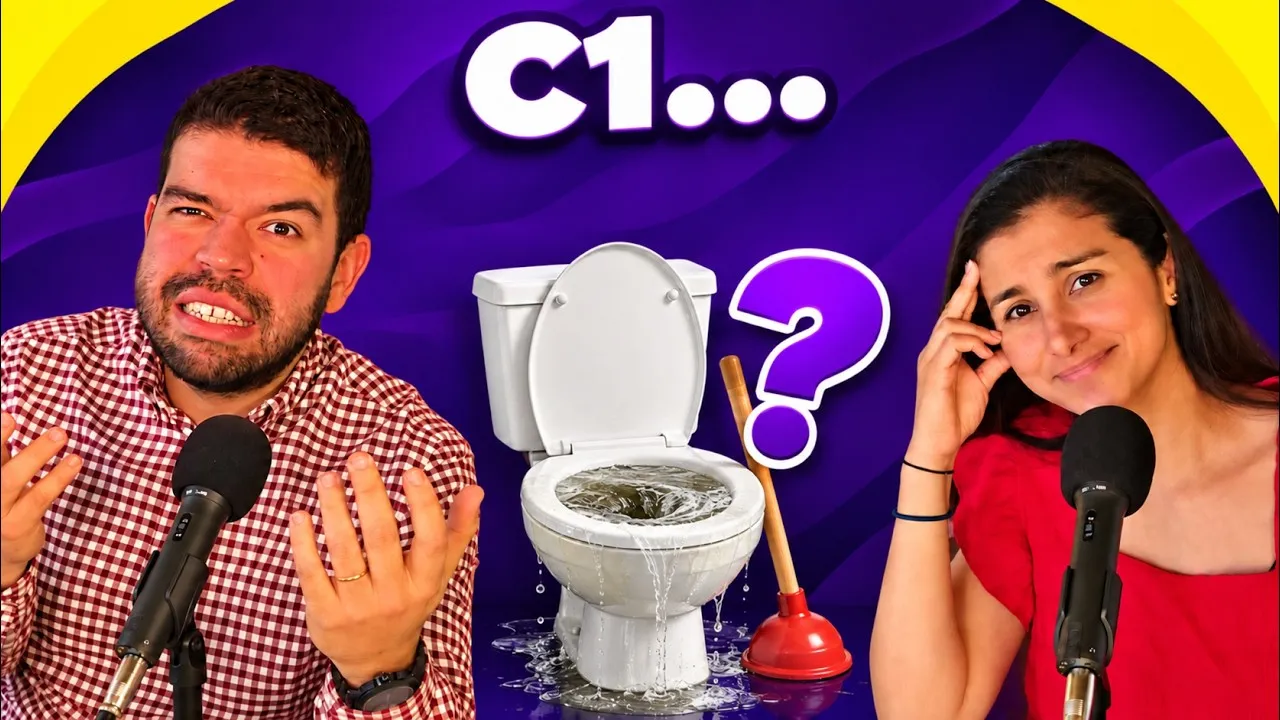
You can argue about immigration in Spanish. You can follow the news, explain your job, maybe even debate politics over dinner. Then the kitchen sink backs up, the plumber arrives, and you've got nothing. Not a verb, not a noun. Just pointing.
That's the question the hosts of the WorldsAcross Spanish Podcast took on in this episode: why can you talk about política and migración but not describe cuando se tapa el baño, when the toilet gets clogged? If this has happened to you, you're not behind. You're in very good company.
It happens to native speakers too
The first thing the hosts admit is that this isn't only a learner problem. Their guest, Mariana, a coach who is Venezuelan and has lived in Lima for almost ten years, found out the hard way. When she started working in construction in Peru, the names of everything changed. "Nada era lo mismo que en Venezuela." Nothing was the same as in Venezuela.
One of the hosts tells a story from a visit to a brother in Maryland. The boiler had a problem, and the host got the mission of meeting the technician. The technician was half Latino and kept mixing in English: something about el boiler. The host's plan? Nod, say "hágale" (go ahead), and hope the house didn't explode. Another host's brain simply switches off when a mechanic starts talking, even in their own language.
So if a native speaker can freeze in front of a boiler, you're allowed to freeze in front of a sink. Chill.
Why it happens
You learn what you care about
Mariana's take: when you study a language on purpose, you focus on what you need. Work vocabulary if you're learning for work. Whatever topics you already read and watch. Nobody sits down and says, "Today I'll study household disasters." As one host jokes, sports talk is hard for them even in Spanish, as a native speaker.
She's seen it in her own classes. A learner preparing to be a medical interpreter had impressive medical vocabulary. In everyday conversation, the words ran out. Another learner wanted to talk about loans and mortgages, couldn't quite manage it in English, switched to Spanish, and hit the same wall there.
Big words are cousins. Small words are strangers.
Pay attention here, because this is the part English speakers feel most. Intellectual vocabulary often looks like English. Política, migración, conflicto, economía. Politics, migration, conflict, economy. Tweak the English word a little and it often works.
House words don't play along. English says the sink is clogged. Spanish says está tapado. No resemblance at all. So the shortcut that carried you through the news section fails you in the bathroom. As the hosts put it, these words "no se parecen en nada". They look nothing alike.
And then there's the map
Everyday words also change from country to country, more than the big ones do. One host mentions bacha for a bathroom sink, and pileta, which they first took to mean a swimming pool. In Argentina, a faucet can be a canilla; for Mariana, from Venezuela, a canilla is a long loaf of bread. None of these is wrong. It's not what you say, it's where you say it.
The sticky note debate
Here's where the hosts didn't agree. One remembers covering everything in college with little paper labels, so well that the roommates learned the words too. Another tells of someone who put labels all over the house so his kids would learn, and laughs: it didn't work.
Mariana's view sits in the middle. After a while, a note you see every day becomes invisible. It only works if you make yourself read it and think about the word each time.
So, depende. If you're the kind of learner who will actually stop and say the word out loud, labels can work. If you'll stop seeing them by Thursday, skip them.
The same "it depends" runs through the whole episode. If you live in Mexico or Medellín and things in your apartment break now and then, learn those words on purpose. If carpentry and plumbing will never come up in your life, it may not be worth the effort. The hosts are honest about that.
The plumber test
Near the end, the hosts ask a sharp question. What's the real test of your Spanish: debating current politics, or calling a plumber? The answer was the plumber.
The reasoning: nobody expects you to talk about a topic you know nothing about, in any language. But a leak or a power cut isn't a niche topic. It's going to happen to you, and you're going to need it. They even listed the usual trouble spots: plumbing, mechanics, the bank, the hospital, the hardware store. Mariana added insurance, like explaining how an accident happened.
This is where many advanced learners get stuck, and it can feel like proof that you aren't really advanced. It isn't. If you're wondering where you actually stand, read how to know if you're already at an advanced Spanish level.
What to do about it
1. Go around the word
Mariana's advice was to find a way around it. She started to say it in English, "work around it," then caught herself: "hay formas de darle la vuelta." There are ways around it. You don't need the exact word. You need to describe the problem.
In the closing mini-challenge, the hosts did exactly that, without the "right" nouns:
- No puedo usar el baño porque no funciona. I can't use the bathroom because it doesn't work.
- En mi casa se fue la luz y ahora no prende ninguna luz. The power went out at my house and now no lights turn on.
- Yo estaba lavando los platos y el agua desapareció. I was washing the dishes and the water disappeared.
One host said that's what really shows your level: not knowing the name of the part, but describing the problem with fluency and confidence. "El problema es del cuadradito este." The problem is with this little box. The electrician will know what you mean. (Fun fact from the episode: one host admitted learning the word disyuntor, circuit breaker, that very day, and confusing it with extintor, fire extinguisher.)
2. Step outside your comfort zone, a little
Juan told the story of a friend who loves photography and noticed he was missing that vocabulary. He watched some photography content in Spanish, and a week later he was talking about technical things Juan didn't know. Mariana says her construction words took about one hard week, not six months. A specific topic isn't that big.
So pick one area of everyday life you avoid and give it a week. A video about home repairs. A conversation with your tutor about your last trip to the bank. Then use the words, or they'll fade. If they keep slipping away, this guide on how to remember words you learn in Spanish helps.
A few everyday words learners often miss
These are our examples, not a list from the episode. Words vary by country, so if you're unsure, ask the person in front of you what they call it.
- El fregadero. The kitchen sink.
- El grifo (also la llave or la canilla, by region). The faucet.
- Está tapado. It's clogged.
- La llave gotea. The faucet is dripping.
- Se fue la luz. The power went out.
- El enchufe. The outlet.
- La bombilla (el foco in Mexico). The light bulb.
- El plomero (el fontanero in Spain). The plumber.
- La ferretería. The hardware store.
- Hacer mandados (hacer recados in Spain). To run errands.
We're leaving out cars and the doctor's office here. Those deserve their own lists.
Your turn
As the hosts said at the end: "Nos pasa a todos." It happens to all of us. Don't stress, keep trying, and go around the word. If you feel stuck in general and not just with the plumber, read how to get past stagnation in Spanish.
Now try it. Think of the last thing that broke in your home. Can you explain it in Spanish, in two sentences, without the name of the part? Say it out loud.
Listen to the full episode on the WorldsAcross YouTube channel.