600 Hours of Listening Before Speaking Spanish
Tilman listened to about 600 hours of Spanish before his first class. How he fit the hours in, what the first classes felt like, and his advice.
WorldsAcross team · November 14, 2026
In this article · 8 sections
"Can I really just listen for hundreds of hours before I say a word in Spanish?"
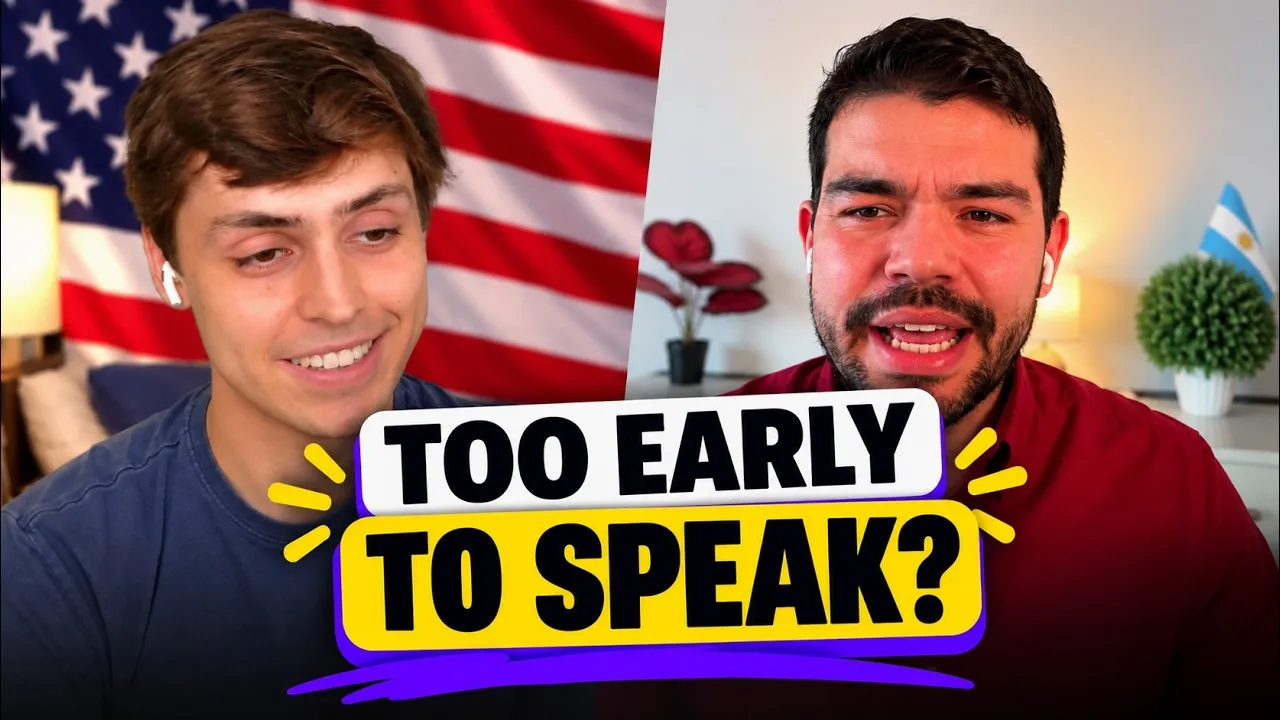
Tilman did something close to that. By his own count, he listened to about 600 hours of Spanish before he started speaking it in classes. Some listening purists would call that too early. He set the number himself, followed his plan, then checked the results.
In this WorldsAcross Story, he talks with our host about why he started, how he fit the hours into his day, and what those first classes actually felt like. His Spanish in the video is clear, relaxed and full of vocabulary, so it's worth hearing how he got there.
Why Spanish
Tilman always liked languages. In school he picked German, partly because he wanted to do something different from everyone else, who mostly picked Spanish. Three years of German, a very traditional class with a strict teacher, grammar, structures and lists of words. Today, he says, he remembers basically nothing except the most basic phrases.
Spanish came later, and slowly. The spark was a first trip to Spain. He was surrounded by Spanish 100% of the time, and he felt, in his words, un poco tonto, a little dumb, for not understanding and not being able to communicate.
About six months after that trip, he realized he had free time, and that if he really wanted to learn something, he had to pick it and make a plan. Spanish was the natural choice. He hears it around him every day, he has friends who speak it, and he saw a concrete benefit he could get out of it.
What made it click: input first
He first tried an audio course that mixes English and Spanish, with memory tricks. Then he found comprehensible input: listening to Spanish you can mostly follow, with the difficulty going up a little at a time. He liked the idea so much that he made it a personal challenge. Do the method 100%, look at the results, then evaluate.
Our host had a label for him right away: Eres un tipo metódico. You're a methodical guy. Tilman likes things that give concrete results and let you see your progress.
Notice the contrast he draws with his German class. There, the focus was grammar and memorizing words. With input, it's "simply listening and paying attention," and you pick up words gradually without trying to force them.
A sprint at the start, then a routine
Tilman started strong: around two hours a day. His reason is honest. The beginning is the most boring part, so he wanted to get through it fast:
Tengo que pasar la etapa horrible rápido. I have to get through the horrible stage fast.
The goal was to reach the point where more interesting content, like podcasts, felt easy. Our host called it un sprint al inicio, a sprint at the start.
After that, listening became part of his day, in blocks that were easy to keep. Where did the hours come from? Mostly from things he was already doing:
- Driving
- Cleaning and washing the dishes
- Cooking
Activities, he says, that don't need active thinking because you've done them so many times they're automatic. And he took hours that used to go to English podcasts and English videos and gave them to Spanish.
That's the part that hooked him. Everybody already consumes content. So, as he put it:
Es más una cosa de cambiar el idioma de tu contenido. It's more about changing the language of your content.
Not about giving things up. If you already watch videos and scroll every day, you can do it in the language you want to learn. If you're wondering whether that's enough on its own, we dig into it in can you really learn Spanish just by listening to podcasts?
The 600-hour decision
Here's where Tilman broke the rules a little. He knows his choice is un poco polémica, a bit controversial, in the online comprehensible input community. Many purists wait much longer before speaking. He thought speaking mattered more than they do.
So he set two checkpoints for himself, and kept them:
- Reading at about 300 hours. He started reading earlier than the usual roadmap, noticed a lot of benefits, and recommends it to everyone.
- Speaking at about 600 hours. By then he was close to moving on to native or near-native content. It was time, as he said, to activate what he knew and his vocabulary.
Is 600 the magic number? Depende. It was right for a methodical learner who wanted to test a plan. If you've been listening for a long time and still feel stuck when you open your mouth, this might be your moment too: read when does the silent period stop working?
The hardest part: the first hours of class
Going from only listening to speaking and reacting in real time? Fue difícil al inicio. It was hard at first.
What kept him going was that he could understand his tutors. All those hours of listening paid off right there, and that gave him a lot of encouragement.
The hard part was recall. In the moment, you can't come up with the word. Then you hear it a minute later and think: of course. That's the gap between knowing a word and using it, and it happens to a lot of learners. It's not a sign you're doing it wrong. For Tilman, it got better with time. He says the first 5 or 10 hours of classes are when you activate your vocabulary and start to build that active skill. After that, it gets calmer and more natural.
These days he takes his classes in the late afternoon, around 5 or 6. He's not a morning person, he says, and at that hour he's not too tired yet. His favorite topics with his tutors? Philosophy, real life, the news. He likes to go deep.
His count when we recorded: about 1,250 hours of input, and around 100 of those hours were WorldsAcross classes. Those are his numbers, from his own tracking.
A phrase he loves: no sé
When our host asked for his favorite word or phrase in Spanish, Tilman's mind went blank. (In Spanish: me quedé en blanco, my mind went blank.) So the answer became the phrase itself: No sé. I don't know.
It's a better pick than it sounds. Our host pointed out that people underestimate it. It gets you out of trouble, and the tone changes everything:
- No sé. Flat: I don't know.
- No, no sé… Slow: I'm not sure about this.
- Puede ser. Its cousin: could be.
What he would tell someone starting now
Tilman doesn't claim to have the perfect recipe. His advice is about time and attention:
Tienes que realmente encontrar el tiempo. You really have to find the time.
He's tried other languages before, and the same thing always happened: if you don't make the effort and find that time, you won't study, you won't listen, you won't do what's needed. Don't treat it like something that will grow on its own. Pay attention, and give it your intention.
This story sticks to what Tilman did. It doesn't say listening-first is the only way. It's one methodical path that worked for one learner, told in his own words.
Your turn
Look at tomorrow. Which hour of English content could you switch to Spanish: the drive, the dishes, the podcast while you cook? Pick one, and write down where you'll start counting your hours.
Watch the full interview on the WorldsAcross YouTube channel.