5 Spanish Verb Structures That Feel Like Cheating
Acabo de, volver a, seguir, soler and llevar: five short Spanish structures that let you say just, again, still, usually and have been doing.
WorldsAcross team · November 14, 2026

In this article · 9 sections
Acabo de llegar. Volví a llamarlo. Sigo esperando. Suelo caminar. Llevo dos años estudiando español.
Five sentences. I just arrived. I called him again. I'm still waiting. I usually walk. I've been studying Spanish for two years. In English, each idea needs its own trick: just, again, still, usually, have been doing. Spanish uses one move for all five.
So here's the question: what if you could say all of that without learning a single new tense? You can. By the end of this lesson you'll have five small structures you can plug almost any verb into. In conversation, that feels a little like cheating. It isn't. It's just how Spanish works.
The trick: one verb does the work
Pay attention here, because this is the whole idea. Each structure is one conjugated verb plus a second verb that never changes. The first verb carries the person and the time. The second one stays in its plain form, the infinitive (comer) or the gerund (comiendo).
Look at what happens with one verb, comer (to eat):
- Acabo de comer. I just ate.
- Volví a comer. I ate again.
- Sigo comiendo. I'm still eating.
- Suelo comer aquí. I usually eat here.
- Llevo una hora comiendo. I've been eating for an hour.
One basic action, five different ideas. When you're speaking, that's the shortcut: you conjugate one verb you already know, and the rest is easy. So when you're mid-sentence and stuck, don't hunt for a new tense. Ask yourself: which helper verb says what I mean?
Acabar de: something just happened
Acabar de + infinitive means you just did something. English uses the word just. Spanish uses a verb that literally means "to finish".
- Acabo de llegar. I just arrived.
- Acabamos de terminar. We just finished.
- Juan acaba de llamar. Juan just called.
Here's where many learners get stuck. Because the meaning is past, they want to put the second verb in the past too: acabo de comí. No, no, no. Only acabar changes. Acabo de comer. Acabo de jugar. Acabo de terminar. The second verb stays in the infinitive, always.
Volver a: do it again
Volver a + infinitive means to do something again.
- Volví a llamarlo. I called him again.
- Volvió a intentarlo. He tried again.
- Voy a volver a leer el libro. I'm going to read the book again.
- No vuelvas a hacerlo. Don't do it again.
You may already know otra vez: Lo hice otra vez. I did it again. That's correct, and you'll hear both all the time. But volver a sounds very natural in conversation, and it gives you lovely combinations like volver a empezar, to start over. (A little dramatic, yeah, I know. We've all been there.)
Seguir: the action hasn't stopped
Seguir + gerund means still doing something, or keep doing it. Notice the second verb here is the -ando / -iendo form, and it doesn't change either.
- Sigo estudiando español. I'm still studying Spanish.
- Sigue lloviendo. It's still raining.
- Seguimos trabajando. We're still working.
- Siguieron hablando. They kept talking.
And it works in any tense, because only seguir moves: Seguí corriendo por horas. I kept running for hours. Seguiré trabajando. I'll keep working. Isn't it beautiful? It is.
Soler: what you usually do
Now, what if the action isn't happening right now? What if it's simply something you normally do? English needs an adverb: usually, normally. Spanish puts the habit inside a verb: soler + infinitive.
- Suelo caminar por la mañana. I usually walk in the morning.
- Suelo cocinar en casa. I usually cook at home.
- Solemos comer aquí. We usually eat here.
- ¿Sueles trabajar los sábados? Do you usually work on Saturdays?
Compare: Normalmente desayuno a las ocho and Suelo desayunar a las ocho. Both mean I usually have breakfast at eight. Both are correct. The second one just sounds a bit more Spanish. And for the past, use solía: Solía vivir aquí. I used to live here. We're sticking to those two forms today, because they're the ones you'll hear most.
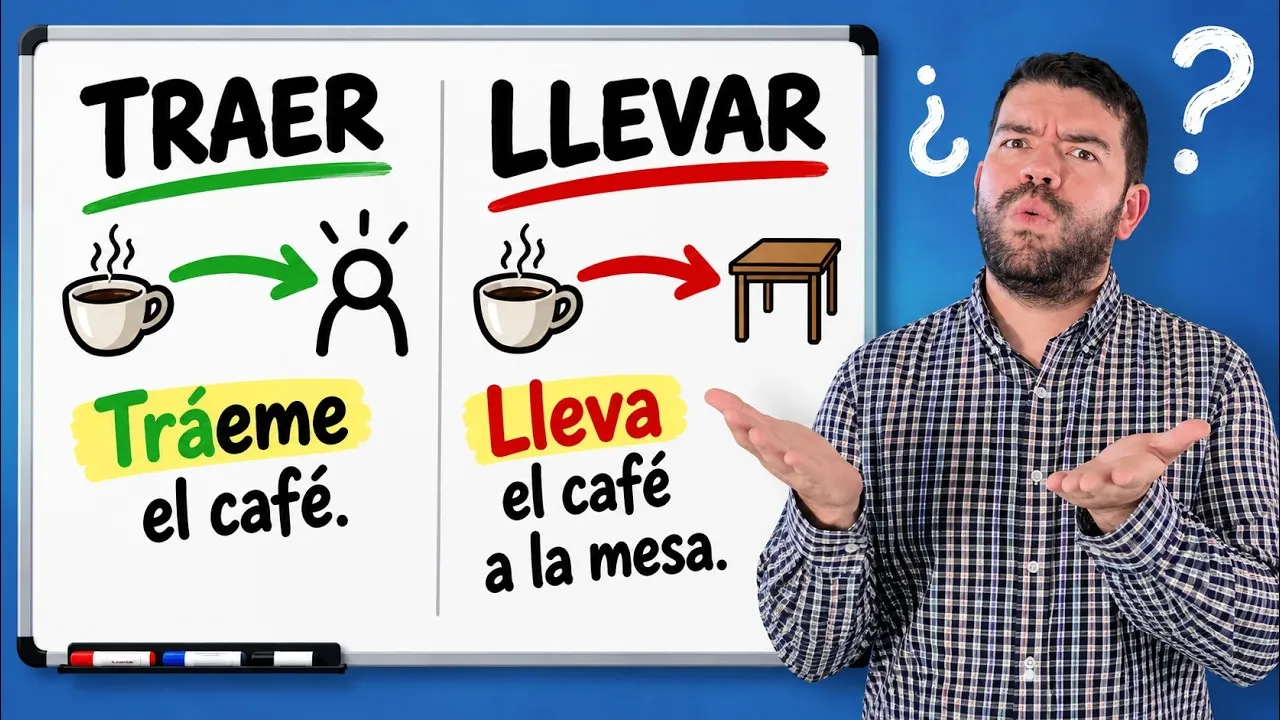
Llevar: how long you've been doing it
This is the one English speakers miss most, because they expect Spanish to copy have been doing. It doesn't. Spanish uses llevar + time + gerund.
- Llevo una hora esperando. I've been waiting for an hour.
- Llevamos seis meses viviendo aquí. We've been living here for six months.
- Lleva años trabajando en esa empresa. She's been working at that company for years.
Notice what Llevo dos años estudiando español tells you: you started two years ago and you're still at it. A word-for-word translation like He estado estudiando español por dos años isn't wrong, and people will understand you. But llevo is what you'll hear in real conversation. You can also say Hace dos años que estudio español. These aren't perfectly separated boxes. If you're unsure, use llevo.
One verb, five sentences
Let me give you a cheat code. Take one verb, estudiar, and watch how much Spanish comes out of it:
- Acabo de estudiar. I just studied.
- Volví a estudiar. I studied again.
- Sigo estudiando. I'm still studying.
- Suelo estudiar por la noche. I usually study at night.
- Llevo dos años estudiando español. I've been studying Spanish for two years.
Five situations, one verb you already knew. That's why these feel like cheating when you speak: you aren't building new grammar in real time, you're reusing a frame. If you understand a lot of Spanish but freeze when it's your turn to talk, frames like these help. More on that in why you understand Spanish but can't speak it. And once you like this pattern, there's a sixth one waiting for you: dejar de + infinitive, to stop doing something.
Recap
- Conjugate the first verb only. The second stays as an infinitive (acabar de, volver a, soler) or a gerund (seguir, llevar).
- Just, again, still, usually and have been doing each have a Spanish verb that does the job.
- Don't translate the English word. Ask yourself which helper verb says what you mean.
Your turn
How would you say I've been learning Spanish for six months? Say it out loud before you check. (Llevo seis meses aprendiendo español.) Then make it yours: swap in your own number and your own verb, and say one more sentence with suelo about your week.
Want to hear Profe Juan walk through all five? Watch the full lesson on Learn Spanish From Scratch.