She Grew Up Hearing Spanish but Couldn't Speak It
Cat grew up around Spanish but answered in English. Now she speaks it with her patients. Her story, and advice if you grew up hearing Spanish too.
WorldsAcross team · November 13, 2026
In this article · 6 sections
Your parents speak Spanish to each other. Your grandparents, your aunts and uncles, everyone at the family table. You understand most of it. And when someone asks you something in Spanish, you answer in English.
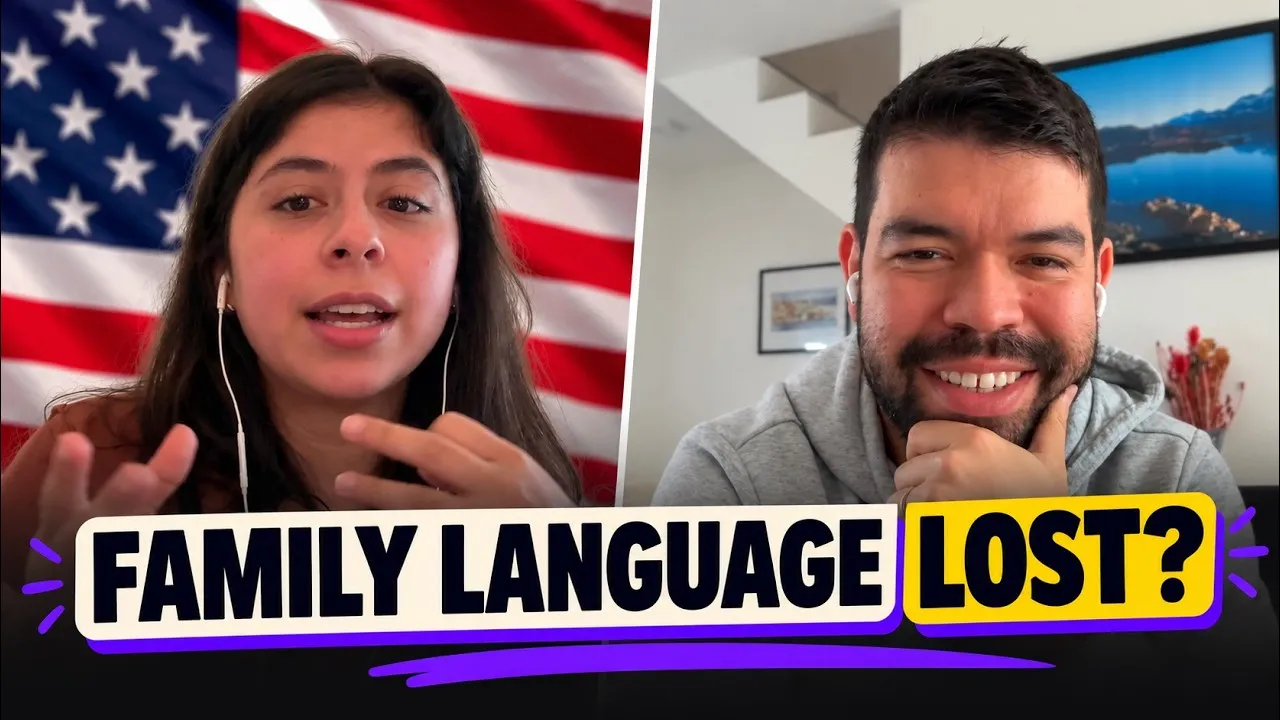
If that sounds like you, you'll recognize a lot in Cat's story. Cat is a WorldsAcross member from Texas, and she sat down with Juan, one of the hosts of our YouTube channel, to talk about her camino, her path with Spanish. She grew up surrounded by the language. She just couldn't speak it. Until, one day, she decided she wasn't going to keep going without it.
Why Spanish: "I wanted to connect"
Juan always starts with the why. Cat's answer was simple: she wanted to connect more with her family, and with the people in her neighborhood. She doesn't live in the city where she was born anymore, but there are still a lot of people around her who speak Spanish, and some of them only speak Spanish.
She grew up in a city near the border with Mexico, where Spanish is everywhere. Her parents are bilingual. Her whole older family speaks Spanish. But at home, it was English. With three kids and busy parents, life moved fast, and by the time she was four or five, it was only English in the house.
Her parents still speak Spanish to each other, and the kids understand. "It's not a secret," she said. They know when their parents are talking about something. They just couldn't answer in Spanish.
There's a history there, too. Cat's parents have told her that when they were kids, teachers told them Spanish wasn't for school: English only. Juan shared that a friend's father said something similar: they pushed English so the kids wouldn't struggle at school. As Juan put it, this kind of story is more common than many people think.
The hardest part, growing up, was her grandparents. She wanted to really talk with them, ask how they were, have a real conversation. She spoke very broken Spanish, they spoke broken English, and the relationship stayed on the surface. That bothered her.
What made it click
Was there a big moment? Cat says no. No dream, no dramatic encounter. She'd wanted to learn Spanish since high school. About ten years later, after a visit to her parents, the inspiration came back, and this time she acted on it.
Before May 2025, she says, she didn't even say buenos días or buenas tardes. Not because she couldn't, but because she was afraid of making mistakes. Then she decided she couldn't keep living without speaking it.
There was another reason it kept coming back every year: her work. Cat is a nurse who does home visits, and many of her patients speak only Spanish. Often a son or daughter is there to translate. Now she can talk with them directly, and she notices the difference on their faces. They relax. Someone understands them.
She also remembers the other side. When she worked in a hospital during COVID, she didn't speak Spanish, and some patients couldn't have family with them. She could see how much more afraid they were when everything around them happened in English. Juan's reflection: even when there's a tool to translate, it's calmer when the person in front of you speaks your language.
Now she wants to keep improving the more formal Spanish of the clinic. She's in people's homes, so it doesn't have to be stiff, but she wants to sound professional.
Her routine, and the hardest part
Here's what stands out: Cat's understanding is already strong. She watches her series in Spanish and follows her friends and family. Growing up around different accents trained her ear, and she says she's good at imitating accents, which helps her pronunciation. Juan agreed: her pronunciation sounds great.
Her weak spot is the one so many people in her situation share: speaking. Even now, when friends or family talk to her in Spanish, she often answers in English, because she still thinks faster in English and she knows they speak it too. She called it a bad habit. Answering in Spanish can feel like she's faking it.
The other hard part isn't a grammar topic. It's keeping the inspiration going, because sometimes she gets bored. Her answer to that is honest: she takes a full break. A week with no studying, no speaking, no reading, no writing. Then she comes back.
Juan asked about her favorite WorldsAcross tutors. Cat named a few, and the reason was the same for all of them: they know grammar inside and out. She loves how Lilian remembers every rule and shares tips like "this sounds better if you say it this way". Cat admits she doesn't remember any English grammar herself, so she loves that her tutors know the rules and the exceptions.
A word she loves: sí o sí
Her favorite expression right now is sí o sí. Juan called it a classic from every Hispanic mom and dad. It means "no matter what", "definitely, no other option".
- Sí o sí tenemos que ir. We have to go, no matter what.
- Mañana llamo a mi abuela, sí o sí. I'm calling my grandma tomorrow, no matter what.
- Sí o sí vamos a Machu Picchu. We're going to Machu Picchu, no question.
Cat's version was about vacation: there are places you have to visit, sí o sí. No option. You just go.
Her advice for someone starting
Juan asked what she'd tell someone who's thinking about starting. Her answer: the hardest part is starting. We all have ideas. I want to learn Spanish, I want to learn Italian, I want to exercise. And we stay there, thinking that one day we will. So don't plan to start next year, or in January, or in May. You can start right now.
Juan's summary: "Y tú hazlo." Just do it.
If you grew up hearing Spanish at home
If Cat's story sounds like yours, a few things are worth saying out loud.
Understanding without speaking is not a failure. It's a head start. Years of hearing Spanish at the table trained your ear for rhythm, accents and real everyday Spanish. Many learners spend a long time building exactly that. This gap is common, and it has its own way forward: you understand Spanish but can't speak it.
Answering in English is a habit, not a verdict. Cat named it perfectly. You think faster in English, and the people you love speak English too, so the switch happens on autopilot. Habits change in small steps. Try one Spanish sentence a day with someone you trust, and tell them you're practicing.
Your family's Spanish is real Spanish. The words and accent you grew up with are not "wrong" or "less correct". They're a regional variety, with a history, and they're yours. You can learn other forms too, and keep this one.
Feeling like you're faking it is normal. Cat said answering in Spanish can feel that way. Juan's answer to her was that she should be proud, and the same goes for you. Speaking the language of your parents and grandparents is not pretending. It's picking up something that was always close.
So here's your sentence for today. Pick someone in your family and say it to them, sí o sí: Quiero practicar mi español contigo. I want to practice my Spanish with you.
Watch or listen to Cat's full interview on the WorldsAcross YouTube channel.