Are Native Speakers Honest About Your Spanish?
Native speakers say your Spanish is great. Are they honest? Our podcast hosts disagree, land on depende, and share one question that tells you the truth.
WorldsAcross team · November 14, 2026
In this article · 7 sections
"Everyone tells me my Spanish is great. My tutor, my coworkers, my partner's family. Are they being honest, or just nice?"
You know the moment. You order, you ask for directions, you get three sentences out, and someone lights up: ¡Qué buen español! What good Spanish! It feels great for about five seconds. Then the doubt kicks in. You know you mixed up a verb back there. So which is it?
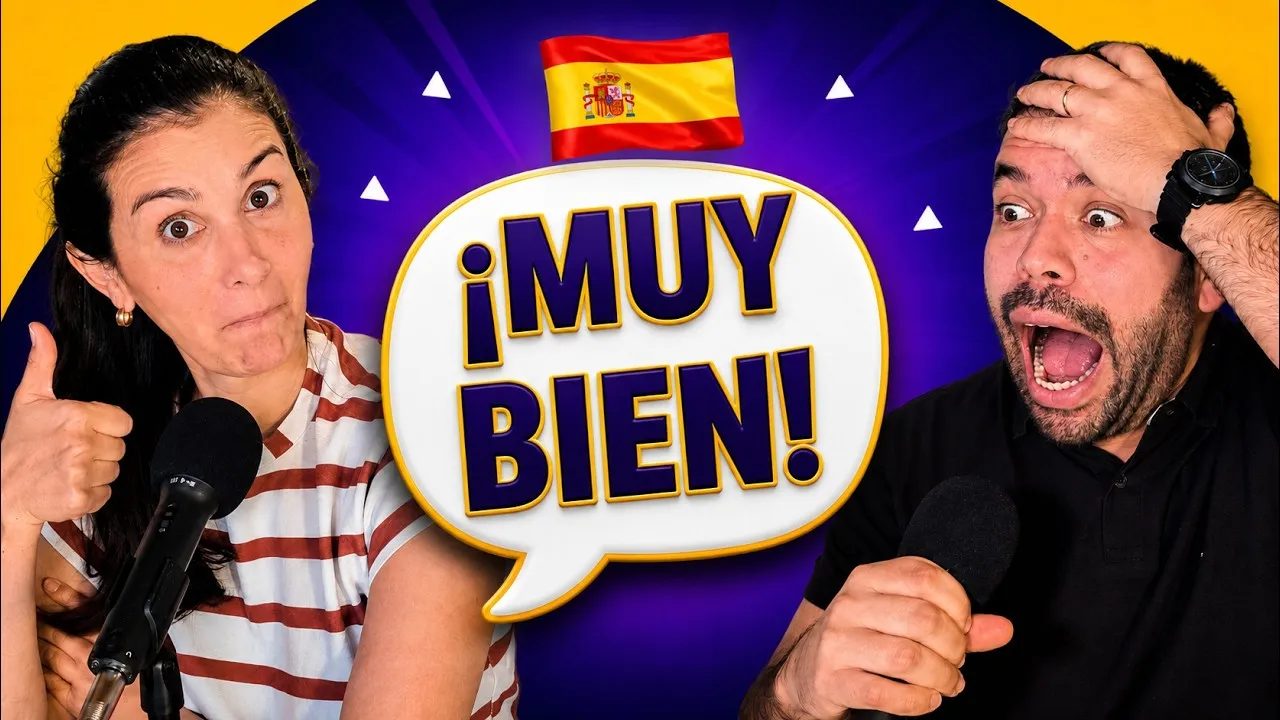
That's the question the three hosts of the WorldsAcross Spanish Podcast took on in this episode. One of them called it a topic that can get polémico, controversial. And they didn't fully agree, which is exactly why it's worth listening to.
"Your French is incredible. I'm your fan."
One of the hosts has a French brother-in-law. When they spoke French together, the brother-in-law slowed down and was careful with him. Kind, but it felt a little condescending.
Then he met the brother-in-law's father, who comes from a small town in the south of France and doesn't speak English. They started talking in French, and the father said something like: "No, your French is incredible. I'm your fan."
Same French. Two very different reactions. Was one of them lying? Not really. They were looking at him from two different places.
The compliment is a social tribute
Here's the idea the hosts kept coming back to. A lot of the time, ¡Qué buen español! isn't a grade. It's a thank-you.
A native speaker hears you making the effort to speak their language, and that means something to them. They can't rate your level after three sentences, and they're not trying to. One host called it un tributo social, a social tribute: "Thank you for speaking my language." It's respect. You respect my language, we're talking in my language, and that's great.
Want proof? One question in the episode prep asked whether another Spanish speaker would get the same praise. Would anyone tell them ¡Qué buen español!? Of course not. The hosts laughed out loud at that one. The compliment only exists because you're not expected to speak Spanish.
Which brings in the other half: expectations. Picture a learner who already speaks well arriving in Buenos Aires and talking to a waiter. The bar for a foreigner is something like ¿Dónde está la biblioteca, por favor? Where is the library, please? Clear that bar, and the compliment comes out, and it's genuine.
Where you are matters too. In a big capital or a city full of tourists, a foreigner speaking Spanish is no big deal. Go to a small town and, as one host put it, eres como una atracción. You're kind of an attraction.
And then there's the waiter who doesn't compliment you at all. He just talks to you fast, like anyone else. The hosts agreed that one is an even bigger compliment. (The exception is the taxi driver. One of the hosts admits that even they can't understand taxi drivers.)
So is it ever condescending? Depende
This is where the hosts split.
One of them said no, never. When his brother-in-law slowed down, it wasn't to talk down to him. It was to push him, so he wouldn't feel overwhelmed.
Another pushed back. "No, you're doing fine, you speak well," said a certain way, is condescending, even when it's unconscious and well meant. The picture: your partner is learning to cook, the dish comes out so-so, and you say, Mi amor, te quedó increíble. Honey, it came out amazing. That's a noble motive. You don't want to hurt anyone. But it still sends mixed signals.
They also pointed at situations where honesty gets mixed with other things:
- A transaction. When someone is selling you something, a compliment is part of the job. A real estate agent will love your Spanish.
- A friend about to quit. If a friend says "I'm no good at languages, I'm done," you won't say "Fine, quit." You'll round up a little. One host said that's not lying, it's saying: you're not there yet, but you can do it.
- Tutors. One host remembered their own teaching days: opening a class with "What good Spanish you speak" meant the level was really there. They wouldn't say it to someone whose Spanish was pretty broken, or even to an intermediate learner. Another host admitted that a tutor can sound a little fake sometimes, even when they mean it.
So where did they land? Depende. It depends on who says it, where, and when. Someone who has learned a language themselves often has more empathy, and means it more. A stranger in a small town means something different from a tutor, and both mean something different from your partner.
If you need a rule of thumb: assume it's mostly genuine, and mostly about your effort, not your exact level. Then read between the lines.
The trap on both sides
There are two ways this goes wrong, and the hosts named both.
The first is believing it too much. Someone hears "your Spanish is great" once, decides they're bilingual, and signs up for an advanced course that isn't their level yet. The hosts said it's not the most common case, but it happens.
The second is way more common: refusing the compliment. Someone says your Spanish is good, and you answer, No, no, todavía hablo muy mal. No, no, I still speak really badly. The hosts' advice was simple: take the compliment. Sure, there are things to practice. But don't sink yourself.
They also had a theory about who says "No, my Spanish isn't good enough." It's almost never real beginners. Beginners know they're learning. It's the people who already speak, who've hit the plateau, feel stuck and want someone to tell them they're moving. That's normal. We all need a pat on the back sometimes. (And yes, it's a bit like the cook who says "It needed a little salt, don't you think?" so you'll tell them it's perfect. One host confessed she does that. Everyone does that.)
If that's you, it might help to look at how to tell if you're already at an advanced level, instead of waiting for a stranger to tell you.
One question that tells you the truth
Here's the practical tip, and it's a good one. When someone compliments your Spanish, a tutor, a friend, anyone, ask them:
¿Qué crees que puedo mejorar? What do you think I could improve?
That second question is where the truth comes out. If they give you something real, a sound you keep missing, a tense you avoid, you know the first compliment was honest too. If they say "Nothing, it's perfect," well, as the hosts put it, se le cae la careta. The mask falls off.
Because there's always something. Even if someone tells you "Your English is so good, I don't know what you're doing here," ask, and they'll find something. That's what helps you keep moving. One of the hosts said that's the whole job of a tutor: find the points to improve, and say them in a way you can hear. Nobody needs a tutor who tells them "Honestly, the subjunctive is just not your thing."
When the compliments stop
The last thing the hosts noticed might be the most useful. For people who get really fluent, the compliment disappears. Nobody tells you "What good Spanish!" every day. It gets said once, and that's it.
After that, the compliment is what people do, not what they say. A native speaker invites you to hang out with their friends, and doesn't introduce you as "my friend who speaks slowly." They just bring you in. No disclaimer, no motivational filter. You're their friend, period.
If you want to dig into the flip side of this, people switching to English on you, read why native speakers answer you in English.
This article sticks to compliments from native speakers. It doesn't get into how to measure your level on paper. That's a different conversation.
Your turn
Think of the last time someone told you your Spanish was good. Where were you, who said it, and what were they comparing you to? Next time it happens, say gracias, then ask ¿Qué crees que puedo mejorar? and see what you get back.
Watch the full episode on the WorldsAcross YouTube channel.