Spanish Words That Can Get You in Trouble
Concha, forro, cachucha, pajita: our podcast hosts share the Spanish words that got them in trouble abroad, and what to do when you say the wrong one.
WorldsAcross team · November 13, 2026
In this article · 6 sections
"Why did everyone go quiet when I said that?" If you've ever used a perfectly normal Spanish word and watched a room freeze, you're in good company. On our podcast, three native speakers admitted it happens to them too. Not to beginners. To them, in their own language, in front of people they really wanted to impress.
The hosts summed it up in one line: No es lo que dices, sino dónde lo dices. It's not what you say, it's where you say it. So this isn't a list of words to fear. It's a few real stories, the words behind them, and what to do when it happens to you.
Lunch with the in-laws
One of our hosts, who is Venezuelan and lives in Buenos Aires, was meeting her partner's parents for the first time. They were eating morcilla, a blood sausage, and in Argentina people often scoop out the inside and leave the casing. So she asked, very sweetly, whether he wasn't going to eat la conchita.
In Venezuela, concha is the peel or the skin, the one on a banana or a plantain. In Argentina, it's a vulgar word for part of the female anatomy. The good news: she's still with the family. "A classic of the classics," the others called it.
If concha and coger are new to you, we cover both, with safe defaults, in Spanish Words That Change Meaning by Country. Here we'll stick to the ones that lesson didn't get to.
Three phone shops in a row
Another host moved to Buenos Aires with his wife and went looking for a phone case. In Venezuela, a phone case is a forro. They walked into a shop and asked for one. Blank stares. Second shop, same face. Third shop, same face. Maybe try the pharmacy?
- Forro. In Venezuela: a case or cover. In Argentina: a very colloquial word for a condom, and also a strong insult.
- Safer: un estuche para el teléfono (a phone case).
- Ojo: as an insult in Argentina, the hosts called it ugly and strong. Don't use it that way. Ever.
His reaction afterwards: "It never crossed my mind. Then I thought, OK, that makes sense."
Innocent words, local second meanings
These are the words from the episode that are completely harmless somewhere, and not somewhere else.
- Cachucha. In Colombia and Venezuela, it's a cap. One host's grandmother called every cap a cachucha, and there's a children's song about taking off your cachucha. Ojo: in Argentina, it's a vulgar word for female anatomy. Safer: gorra. The hosts' verdict: it sounds cute and harmless, but no.
- Cajeta. In Mexico, it's a sweet, like dulce de leche or arequipe. Ojo: in Argentina, it's another vulgar word for the same body part. One of the hosts had just learned that, in the office. Safer: outside Mexico, say dulce de leche.
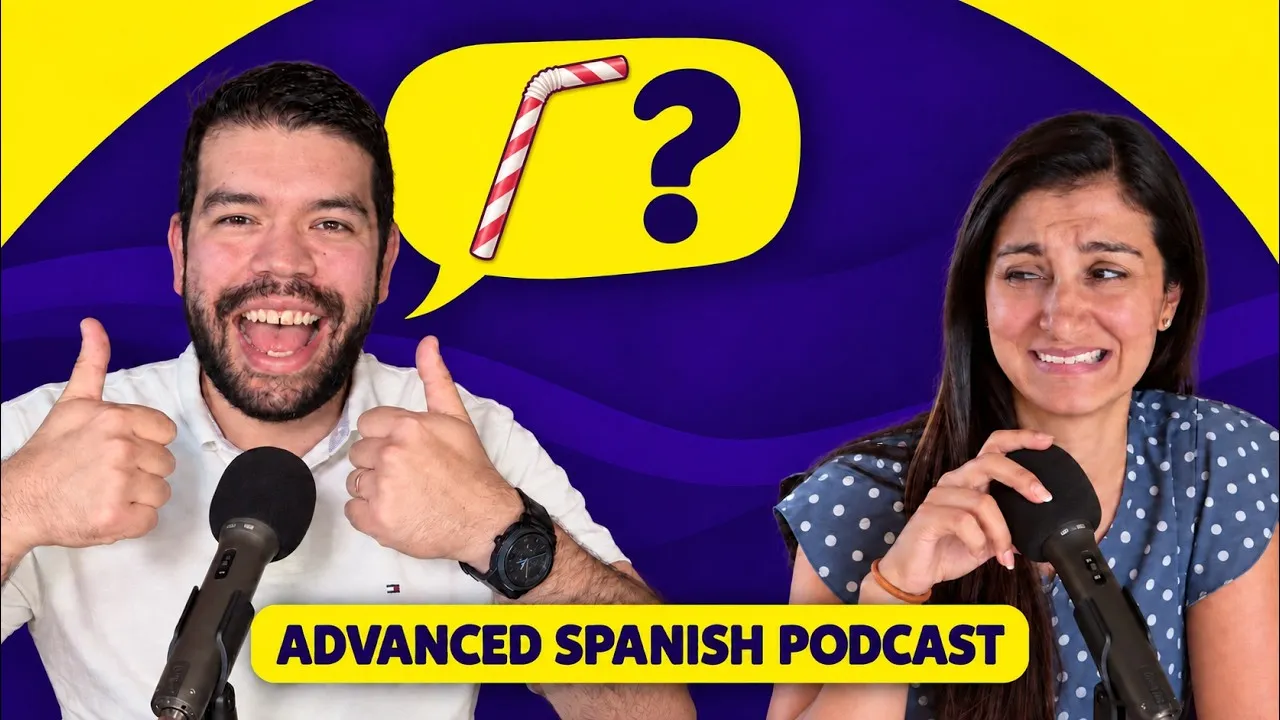
- Pajita. Type "straw" into a translator and this is probably the first thing you'll see. So you trust it. Ojo: in many countries, paja also has a vulgar meaning. Even everyday uses change: in Argentina, me da paja means "I can't be bothered". In Venezuela, a straw is a pitillo. The hosts' advice: skip pajita. One of them still doesn't know what to call a straw in Argentina, so she'd just describe it: estas cosas para absorber, these things for sucking up your soda. Honestly, that works.
- Bicho. In Venezuela, it can be just "a thing", any thing. It's also Cristiano Ronaldo's nickname. Ojo: in the Caribbean, including Puerto Rico, it's slang for the male anatomy. Fine at home in Venezuela, but one host said he wouldn't risk it on a trip to Puerto Rico.
- Arrecho. In Colombia, it means aroused. In Venezuela, it's a very common word with lots of meanings and lots of emotion. Ojo: the Venezuelan host who says it all the time voted "no way" for learners. Too many meanings, too much punch.
A small note on coger, because the episode has a story about it: in a video the hosts love, a young Venezuelan boy at school in Ecuador remembers how lost he felt when classmates said Juguemos a las cogidas, the name of a playground game. The hosts' verdict on coger was "safe, mostly". People will laugh, but nobody will give you a dirty look.
When you just want to sound cool
There's a second kind of trouble, and it doesn't come from double meanings. It comes from trying to sound local. The hosts have a word for that in Argentina, cancherear: showing off a bit with the local slang. One host has lived there for eight years and still feels proud every time a new Argentine word lands.
The risk is the friendly insult. One host once told a Mexican friend "don't be silly" with a word that's casual in Venezuela, the way it sounds in Mexican movies. The goal was to sound cool. The friend asked if they wanted to fight.
- Boludo (Argentina). Friends use it constantly, sometimes every few words. But the hosts couldn't agree whether it's safe. One said yes. Another said: you think you're safe, but you're not. The host who lives there uses it, and still uses it carefully, because sometimes it sounds friendly and sometimes it really doesn't.
- Pendejo. In Argentina, people say it to kids, and there it's pretty normal. Elsewhere it lands as an insult, and even the host who knows the Argentine use said she wouldn't want to be called that. Verdict: it depends, and if you're unsure, don't.
- Huevón and cabrón. "Very aggressive." The hosts said no, unless you actually mean to offend someone.
Why does a word that's fine between friends sting from you? The hosts pointed to local pride. Some words are for the group. Between people from the same place, or the same community, a rough word can be affectionate. From an outsider, even in a friendly tone, it can feel like an insult. One host admitted she feels uncomfortable when her own crew uses their in-group slang loosely around people from other countries. So imagine how it sounds coming from a visitor.
And there's the reverse. Say chévere (great, cool) to a Venezuelan and they melt a little. Colombians will like it too. Not every local word is a trap. For more of the friendly kind, see Spanish Slang and Idioms.
So, what do you do when it happens?
At some point the hosts laughed: "If people listen to this episode, they'll be so stressed they won't say anything." And then they took it back. It's not a big deal. It's fun. Here's what they actually do.
- Ask, right away. ¿Se dice así? (Is that how you say it?) or ¿Dije algo raro? (Did I say something weird?). Asking turns an awkward moment into a mini lesson.
- Experiment with someone you trust. The hosts imagined an Argentine sister-in-law greeting one of them with a Venezuelan in-group word. Weird? Very. But it would make her laugh, and she'd explain why it sounded odd. That's the kind of person to test new slang on first.
- Read the room. One host has been testing his Argentine slang for years, and he still says a word and watches faces. Good reaction, keep it. Strange faces, drop it.
- Laugh with them. The in-laws story is now a family classic. Most of these moments turn into the story you tell later.
If locals switch to English after a slip, that's usually not about the slip. We talk about why in Why Native Speakers Answer You in English.
One thing to try
Next time you learn a slang word you love, before you use it, ask a native speaker one question: ¿Dónde se puede decir esto? Where can I say this? You'll get the meaning, the region and the tone in one answer.
And now, your turn. Have you ever said a word that meant something completely different where you were? What was it, and how did people react?