Voy a Ir Yendo: What It Means and Why It Works
Voy a ir yendo uses ir three times, and it makes perfect sense. Learn the job each form does and why it means I should get going, little by little.
WorldsAcross team · November 13, 2026
In this article · 10 sections
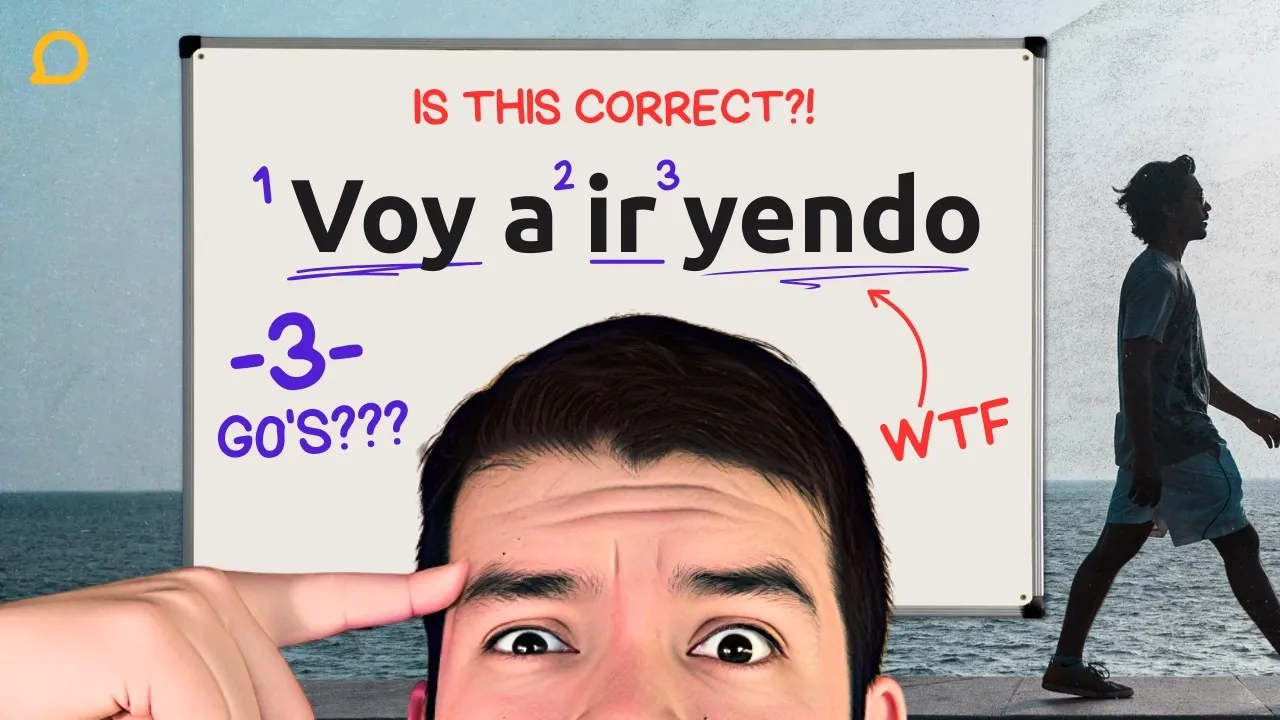
Voy a ir yendo. Three forms of the same verb, ir, in one short sentence. Voy, ir, yendo. And to a native speaker, it makes perfect sense.
Now try it in English, word by word. "I'm going to go going." Or, as one learner put it, "got to go going." It sounds like a mistake. And it raises a fair question: if you want to leave, why not just say Me voy, I'm leaving, and be done with it?
This is where many learners get stuck. Three forms of one verb feels like repetition. Tranquilo. It isn't repetition. By the end of this article you'll be able to take the sentence apart, see what each piece adds, and put it back together.
The question to ask: what job is each verb doing?
Here's the trap. When you see a sentence like this, the instinct is to ask "what does ir mean?" You already know the answer: to go. And that answer doesn't help, because it gives you "go go going."
So don't ask what the verb means. Ask yourself a different question: what job is each verb doing? In voy a ir yendo, every form of ir has a different job. Each one adds information. None of them repeats the one before.
Let's look at the three jobs one at a time.
Job 1: voy a, the near future
You probably know this one already. Ir in the present, plus a, plus an infinitive, talks about the near future: something you're going to do.
- Voy a estudiar. I'm going to study.
- Voy a comer. I'm going to eat.
- Voy a salir. I'm going to go out.
Notice what voy a is doing here. It's not about movement at all. Nobody is going anywhere when they say voy a estudiar. Its job is to point at the future and say: this is my plan, this is what's coming. If you want the full picture of this structure, we compare it with the other future in when to use ir a vs the simple future tense.
Job 2: ir, the actual going
Now the second ir. After voy a you need an infinitive, the action you're going to do. And sometimes that action is, well, going.
- Voy a ir al trabajo. I'm going to go to work.
- Voy a ir al supermercado. I'm going to go to the supermarket.
- Voy a ir contigo. I'm going to go with you.
Pay attention here. English does the exact same thing: "I'm going to go." Nobody thinks that's strange in English. The first "going" is the future, the second "go" is the movement. Spanish works the same way. So far, two jobs: voy a is the plan, ir is the action of going or leaving.
Job 3: yendo, little by little
Here's the new piece. Yendo is the gerund of ir, the "-ing" form. Most gerunds end in -ando or -iendo: estudiando, comiendo, corriendo. Ir is irregular, so instead of something like "iendo" you get yendo.
And when ir comes before a gerund, it does a special job: it shows gradual progress. Something happening little by little, step by step.
- Voy aprendiendo español. I'm learning Spanish little by little.
- Voy mejorando. I'm gradually getting better.
- Voy entendiendo. I'm starting to understand, bit by bit.
Compare Estoy aprendiendo español with Voy aprendiendo español. The first says the action is in progress right now. The second adds a sense of moving forward, slowly, over time. Same gerund, different helper verb, different picture. If gerunds still feel a little slippery, we cover them in how to use the infinitive, gerund and participle.
Putting it back together
Now let's rebuild the sentence, one job at a time.
- Voy a: the future intention. I'm about to do something.
- ir: the action. Going, leaving.
- yendo: the gradual part. Little by little.
Put together, Voy a ir yendo means something like "I'm going to start heading out," "I should get going," or "I'm going to be on my way." It doesn't say you're gone. It says you're starting the process of leaving.
That's the difference with Me voy. Me voy is the moment: I'm leaving. Voy a ir yendo is the process: I'm going to start leaving. Isn't it beautiful? Three forms of one verb, and each one adds a layer.
One scene: leaving a family dinner
Imagine you're at a family dinner. It's getting late, and you have work tomorrow. You look at your phone and say, Bueno, voy a ir yendo. Well, I should get going.
Nobody panics. Nobody says goodbye yet. Your aunt says, ¿Ya te vas? Are you leaving already? Someone offers you more dessert. You stand up, you talk a little more by the door, you hug a few people. Your cousin says, Ve yendo, ahora te alcanzo. Go on ahead, I'll catch up with you.
Twenty minutes later, coat on, you finally say, Ya me voy. I'm leaving now. And this time you mean it.
In many Latin American gatherings, saying goodbye can feel less like a moment and more like a process. Voy a ir yendo fits that perfectly: it opens the goodbye, it doesn't close it.
More sentences with voy a ir + gerund
The pattern isn't only about leaving. You can use voy a ir + gerund with other verbs to talk about future progress, step by step.
- Voy a ir aprendiendo. I'm going to learn little by little.
- Si me explicas, voy a ir entendiendo. If you explain it to me, I'll gradually understand.
- Voy a ir mejorando. I'm going to get better bit by bit.
Look at the second one. It's a lovely sentence for a learner. You're not promising to understand everything at once. You're saying understanding will come, gradually.
Related ways to say you're leaving
A few phrases you'll hear around voy a ir yendo:
- Ve yendo. Go ahead, start going. You say it to one person, often when you'll follow later.
- Vayan yendo. The same, to a group: you all go ahead.
- Ya me voy. I'm leaving now. Shorter, and closer to the actual moment.
- Me tengo que ir. I have to go.
These aren't perfectly separated boxes, and in a real goodbye you might use all of them in a row. If you're unsure, Me tengo que ir works almost anywhere. And if me voy and irse make you curious, we explain how they differ from salir and dejar in salir, irse and dejar: three ways to say leave.
Recap
- Voy a sets up the near future: Voy a estudiar. Ir is the action of going: Voy a ir al trabajo.
- Ir + gerund shows gradual progress: Voy mejorando. Yendo is the irregular gerund of ir.
- Voy a ir yendo means "I should get going": you're starting the process of leaving. Spanish layers information. Don't ask what the verb means. Ask what job each verb is doing.
Your turn
Write one sentence with voy a ir + a gerund about something you're working on. Voy a ir aprendiendo..., Voy a ir mejorando..., or your own. Then say it out loud and ask yourself: what job is each verb doing?
Next, compare voy aprendiendo with estoy aprendiendo by reading how to use the present progressive in Spanish. Profe Juan walks through the whole sentence in the full lesson on Learn Spanish From Scratch. Watch it above.