Saber, Conocer, Poder, Querer: Preterite vs. Imperfect
Why conocí means I met and supe means I found out: how saber, conocer, poder and querer shift meaning in the preterite, with one question to ask yourself.
WorldsAcross team · November 13, 2026
In this article · 9 sections
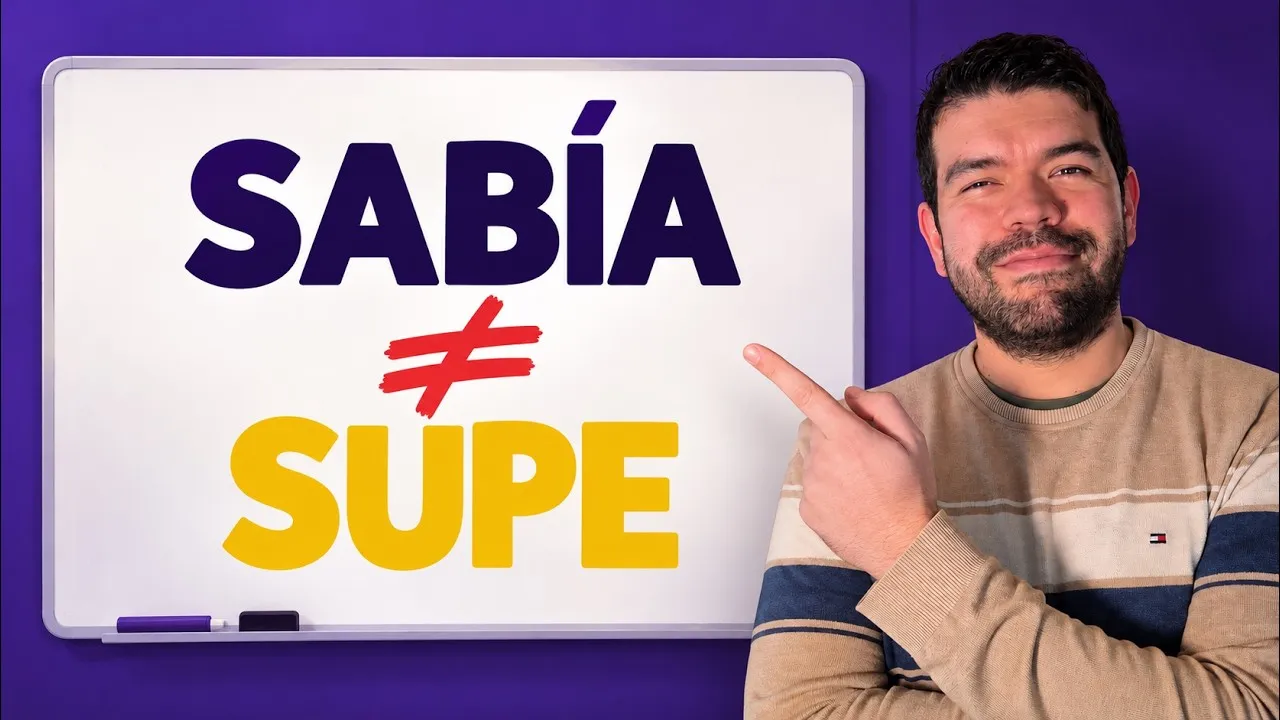
Conocía a María. I knew María. Conocí a María. I met María. Sabía la verdad. I knew the truth. Supe la verdad. I found out the truth.
Same verb, one small change in the ending, and suddenly English needs a completely different word. So what happened? Did Spanish just decide to change the meaning of these verbs for fun?
No. And this is where many learners get stuck, because textbooks often hand you a list: supe means "found out," conocí means "met," pude means "managed to." Memorize, repeat, forget. Today we're doing something different. We're going to look at what the two past tenses actually do, and once you see it, these four verbs stop looking random.
By the end of this, you'll have one question you can ask yourself every time you meet saber, conocer, poder or querer in the past.
The idea behind all four verbs
Pay attention here, because this is the whole lesson in one line: the imperfect describes a state that already existed. The preterite shows the moment that state began, or a result.
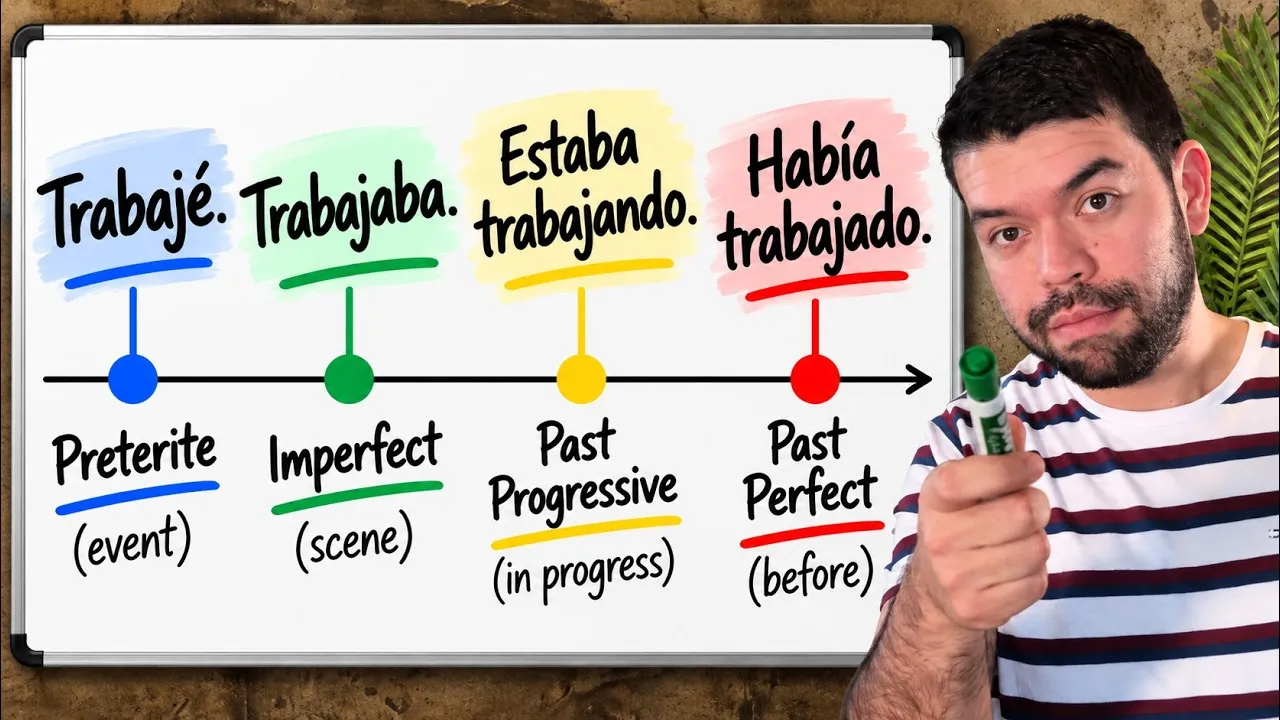
Spanish didn't change the meaning of the verb. It changed the way you look at the past. English simply doesn't have that switch inside one verb, so it reaches for a different verb instead. If you want the full map of the past tenses first, read Spanish past tenses explained.
Saber: knowing vs. finding out
With the imperfect, the knowledge was already there. It's a state.
- Yo sabía la verdad. I knew the truth.
- Sabía que estaba casado. I knew he was married.
With the preterite, you're looking at the moment the knowledge started.
- Supe la verdad ayer. I found out the truth yesterday.
- Supe ayer que estaba casado. I found out yesterday that he was married.
Compare the last two. In the first, you'd known for a while. In the second, yesterday was the moment everything changed. A little dramatic, yeah, I know. But that's exactly the point: supe is the moment.
Conocer: knowing someone vs. meeting them
Same logic. The imperfect describes a relationship that already existed.
- Conocía a Juan. I knew Juan.
- Cuando trabajaba allí, conocía a todos. When I worked there, I knew everybody.
The preterite shows where that relationship began.
- Conocí a Juan en 2022. I met Juan in 2022. Before that, I didn't know him.
- Conocí a Ana en mi primer día. I met Ana on my first day.
Notice that English needs two verbs, "know" and "meet." Spanish keeps one verb and moves the camera: either you see the relationship, or you see its first moment. For more on this verb and its neighbor, read the difference between saber and conocer.
Poder: ability vs. a specific result
With poder, the imperfect talks about ability, what was possible in general.
- Podía abrir la puerta. I could open the door. I had the ability.
The preterite talks about what actually happened in one situation.
- Pude abrir la puerta. I managed to open the door. Maybe after several attempts, but I did it.
Now look at this. The negative is where it gets really useful:
- No podía abrir la puerta. I couldn't open the door. A general situation: it was locked, I didn't have the key.
- No pude abrir la puerta. I tried, and I failed. That specific time, it didn't work.
Here's the trap. Learners memorize pude = "managed to" and then freeze when they see no pude. Don't memorize the translation. Think: ability, or a specific result?
Querer: a desire vs. an attempt or a decision
The imperfect describes a desire that existed.
- Quería hablar contigo. I wanted to talk to you.
The preterite turns that desire into something more like an event. Depending on context, it can mean "I wanted" or "I tried."
- Quise hablar contigo. I wanted to talk to you, as one moment, or I tried to.
- Quise llamarte, pero no tenía señal. I tried to call you, but I didn't have a signal.
And again, the negative is where the difference shines:
- No quería ir. I didn't want to go. That was my feeling.
- No quise ir. I refused to go. That was my decision.
Feeling vs. decision. Same verb.
The pattern
Put the four verbs side by side and the pattern appears:
- Imperfect: an existing state. Knowledge, a relationship, an ability, a desire.
- Preterite: a change or a result. A beginning, a result, an attempt, a decision.
So the rule isn't a list of translations. It's a question you ask yourself: "Am I describing a state, or a specific change or result?"
I'll be honest with you: context still matters. These aren't two perfectly separated boxes. Quise, for example, can lean toward "I wanted" or toward "I tried," and the rest of the sentence tells you which. But the question will get you to the right answer most of the time, and it's much easier to carry around than a list. If you want to practice the same state-or-event idea with another verb, read estaba vs. estuvo.
One scene, four verbs
Imagine your first day at a new job. Here's the story, told with the four verbs in both tenses:
El lunes empecé en una oficina nueva. No conocía a nadie. A las nueve conocí a Ana, mi jefa. Quería causar una buena impresión. Ana sabía que mi tarjeta todavía no funcionaba, pero yo no lo sabía. Quise entrar en la sala de reuniones y no pude. Lo supe después de tres intentos: la tarjeta no funcionaba. Al final, Ana me abrió la puerta y pude entrar.
On Monday I started at a new office. I didn't know anybody. At nine I met Ana, my boss. I wanted to make a good impression. Ana knew my card didn't work yet, but I didn't know. I tried to get into the meeting room, and I couldn't. I found out after three attempts: the card didn't work. In the end, Ana opened the door for me and I managed to get in.
Look at the pairs. No conocía (state) and conocí (the moment it began). Sabía (knowledge already there) and supe (the moment I found out). Quería (a desire) and quise (an attempt). No pude (a failed attempt) and pude (the result). The verbs never decided the meaning. The way the story looks at each moment did. Isn't it beautiful? It is.
Notice too that the imperfect lines are the background of the scene, the way they are in any story. That's no accident: read why the imperfect is used to tell stories to see it at work.
Recap
- Saber: sabía = I knew. Supe = I found out.
- Conocer: conocía = I knew someone. Conocí = I met them.
- Poder: podía = I was able to. Pude = I managed to. No pude = I tried and failed.
- Querer: quería = I wanted. Quise = I wanted or tried. No quise = I refused.
And the one line to keep: Spanish doesn't change the verb's meaning. It changes how you look at the past, and English sometimes needs a different verb to follow it.
Now it's your turn
What's the difference between these two sentences?
- No quería hablar con él.
- No quise hablar con él.
Ask yourself the question: state, or change and result? Write your answer in English, then write one sentence of your own with supe or conocí about something that really happened to you, and say it out loud.
Next lesson: see the whole picture of the past with Spanish past tenses explained. Nos vemos.