How to Say Become in Spanish: Ponerse, Hacerse, Volverse
Se puso nervioso, se hizo médico, se volvió desconfiado. English says became for all three. Learn the one question that tells you which Spanish verb to use.
WorldsAcross team · November 13, 2026
In this article · 9 sections
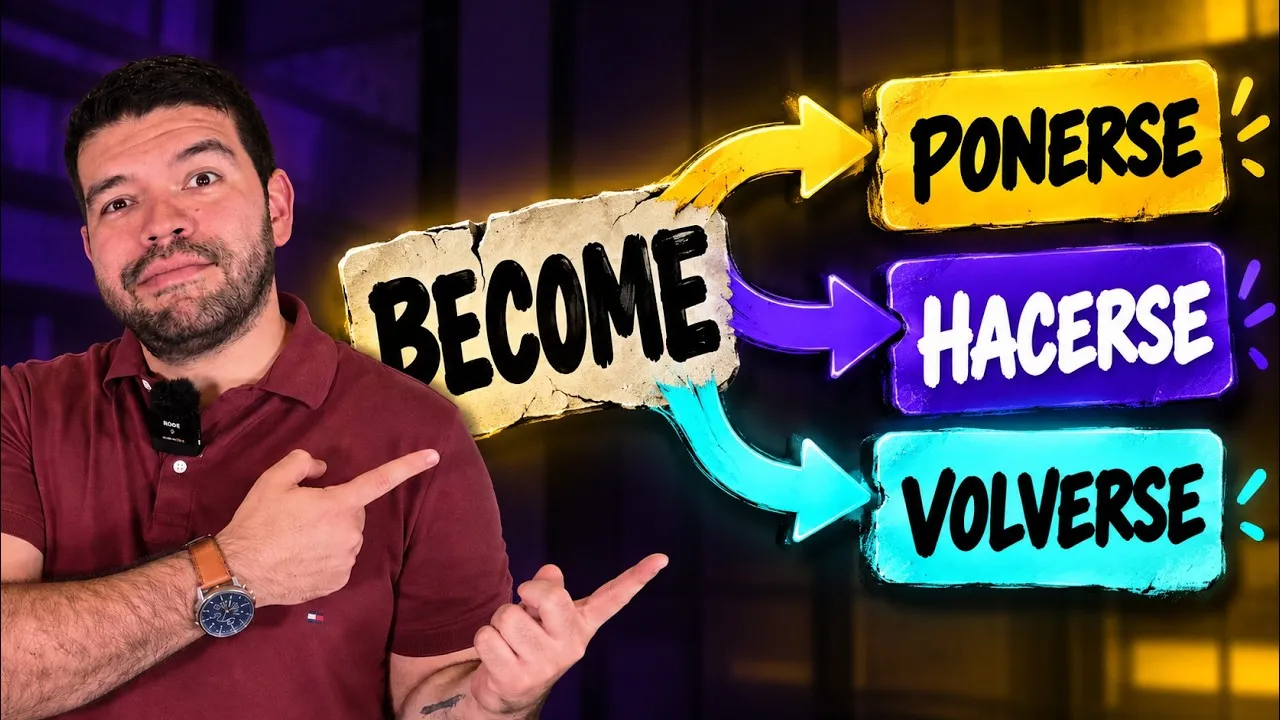
Se puso nervioso. Se hizo médico. Se volvió muy desconfiado. In English, that's easy: he became nervous, he became a doctor, he became very distrustful. One verb, three times. Spanish uses three different verbs: ponerse, hacerse and volverse.
Why? Because Spanish likes to torture you. No, no, no. Because Spanish isn't asking the question English asks. English asks: did something change? Spanish asks: what kind of change was it?
This is where many learners get stuck and start memorizing lists of adjectives for each verb. Tranquilo. By the end of this article you'll have one question that picks the right verb most of the time, and you'll know where the edges are fuzzy.
The question to ask yourself
Don't memorize become = ponerse. Every time you want to say "became," ask yourself one thing: what kind of change was it: a state, a path, or who they are?
- A state you enter, often quickly and for a while: ponerse.
- A path you follow, often with your own effort: hacerse.
- A change in who someone is, usually not on purpose: volverse.
Let's look at each one.
Ponerse: entering a state
Ponerse is for entering a new state, often quick and temporary. Emotions fit here perfectly.
- Se puso nervioso. He got nervous.
- Me puse triste. I got sad.
- Se puso contenta. She got happy.
- Juan se puso enfermo. Juan got sick.
Notice the English. We rarely say "became" here. We say "got": got nervous, got sad, got sick. That's a nice clue. If "got" sounds natural in English, ponerse is usually a good bet in Spanish.
Pay attention here. A minute ago he was calm. Now he's nervous. Nothing about who he is changed. He just entered a new condition, and he'll probably leave it later. That's ponerse.
If you've read our lesson on how to use poner, this will feel familiar: poner places something into a new position, and ponerse places you into a new state.
Hacerse: becoming something through a process
Hacerse is for becoming something through a process: a profession, an identity, a belief, a status. Very often the person takes part in the change. They studied, they decided, they worked for it.
- Se hizo médico. He became a doctor.
- Se hizo profesor. He became a teacher.
- Se hizo vegetariano. He became a vegetarian.
- Se hizo budista. He became a Buddhist.
Imagine the path behind each sentence. Years of medical school. A decision to stop eating meat. A spiritual practice. That's not a mood that comes and goes.
Now look at this: Me puse médico. That doesn't work. Becoming a doctor isn't a state you slip into before an exam. It's a road you walk. So it's me hice médico.
Volverse: a deeper change in character or nature
Volverse is for a deeper change, one that reaches someone's character or nature. And usually it isn't intentional. Nobody plans it. It just happens to them.
- Se volvió muy desconfiado. He became very distrustful.
- Se volvió muy frío después de aquello. He became very cold after that.
- Se volvió loco. He went crazy.
Compare se puso triste with se volvió muy frío. The first is a feeling that will pass. The second describes who he is now. Something changed inside him, and it stayed.
Volverse also works for things and situations, not only people:
- La situación se volvió peligrosa. The situation became dangerous.
- El problema se volvió más complicado. The problem became more complicated.
Again, nobody chose it. The situation turned into something different.
One person, three changes
Let's put all three into one life. Same person, three moments.
- Antes del examen, se puso nervioso. Before the exam, he got nervous. A state.
- Años después, se hizo médico. Years later, he became a doctor. A path.
- Después de años difíciles, se volvió muy desconfiado. After difficult years, he became very distrustful. Who he is.
Three times English says "became" (or "got"). Three different kinds of change in Spanish. Isn't it beautiful? It is. Spanish makes you look at the change itself, not just the fact that something changed.
Here's one more way to see it. After se puso nervioso, you'd say está nervioso. After se hizo médico, you'd say es médico. If the difference between those two still trips you up, our guide to ser and estar will help.
Be honest about the edges
Now, to be honest: this is not a mathematical formula. These aren't three perfectly separated boxes.
You'll hear both se hizo famoso and se volvió famoso. Both are used. It depends on how the speaker sees it. Se hizo famoso leans toward a path, something that came with his work. Se volvió famoso leans toward a change that happened to him. Same fact, a slightly different way of framing it.
You'll also meet two more ways to say "become." Llegar a ser is for reaching a status over time: Llegó a ser director. He eventually became the director. Convertirse en means to turn into: El problema se convirtió en una crisis. The problem turned into a crisis. We're not getting into those today. Get the three main ones first.
And notice that all three main verbs come with se. If reflexive verbs still feel slippery, read how to know if a verb is reflexive.
A reader asked
At the end of the video, Profe Juan answers a question from a viewer: should you say ¿Cómo está el clima? or ¿Qué tiempo hace? to ask about the weather?
His answer: both work. ¿Cómo está el clima? feels natural to him, and he says it's more common in the Caribbean. His Argentine coworkers say ¿Qué tiempo hace? And to ask about the temperature, ¿Cuánto hace? is more common in the south. Neither one is wrong. It depends on the region. For more weather Spanish, see how to talk about the weather in Spanish in any season.
Recap
- Ponerse is entering a state, often quick and temporary: Se puso nervioso. Me puse triste. English often says "got."
- Hacerse is a path: a profession, an identity, a belief, often with the person's own effort: Se hizo médico. Se hizo vegetariano.
- Volverse is a deeper change in character or nature, usually not on purpose: Se volvió muy desconfiado. La situación se volvió peligrosa. Don't memorize become = one verb. Ask: was it a state, a path, or who they are?
Your turn
Translate this sentence, out loud or on paper: "After hearing the news, Ana became very sad."
First ask yourself: what kind of change was it? Sadness after bad news is a state she entered, and it will pass. So: Al oír la noticia, Ana se puso muy triste.
Now write one sentence of your own about someone you know with each verb. Then go deeper into ponerse and the rest of its family in how to use poner in Spanish.