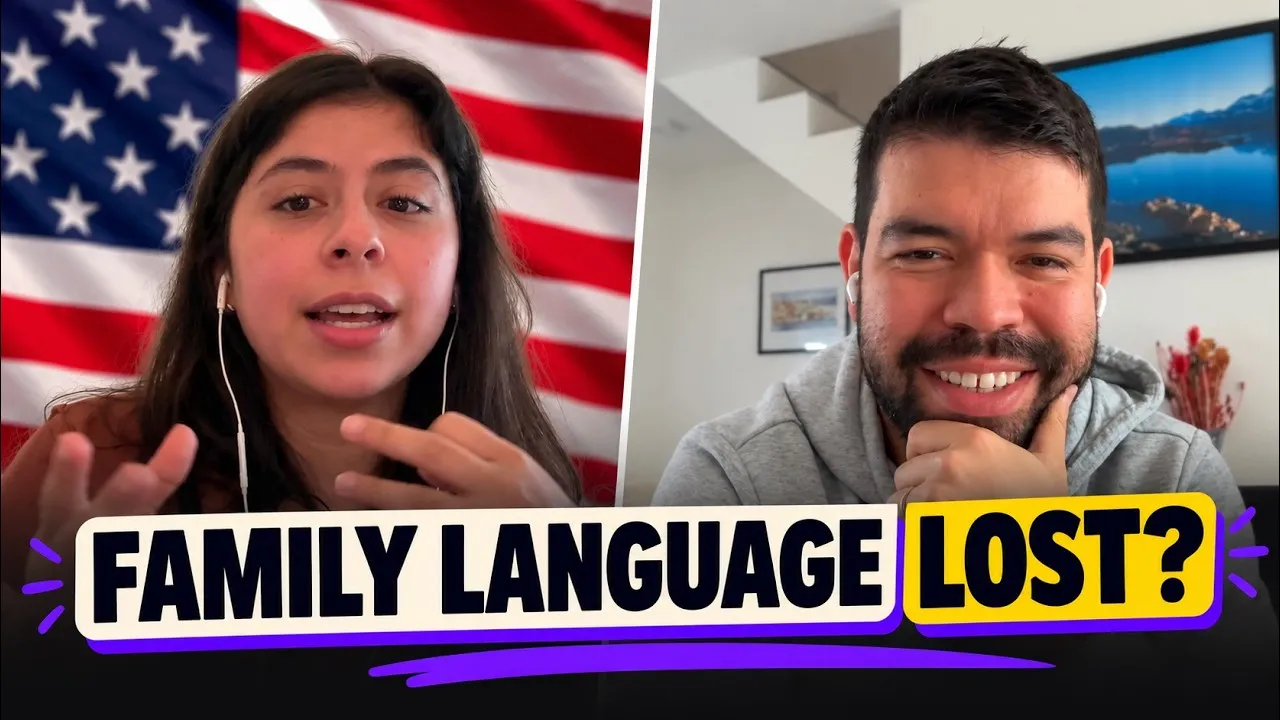
Why Native Speakers Answer You in English
You ask in Spanish, they answer in English. Our podcast hosts explain why it happens, why it's rarely about your level, and what to try next time.
WorldsAcross team · November 13, 2026
In this article · 5 sections
"Why do native speakers answer me in English? This is horrible."
You practiced. You ran the order in your head on the way there. You walk up to the counter, say Un café, por favor, and the person behind it smiles and asks, "Sugar?" All that prep, and the conversation switched to English before it even started.
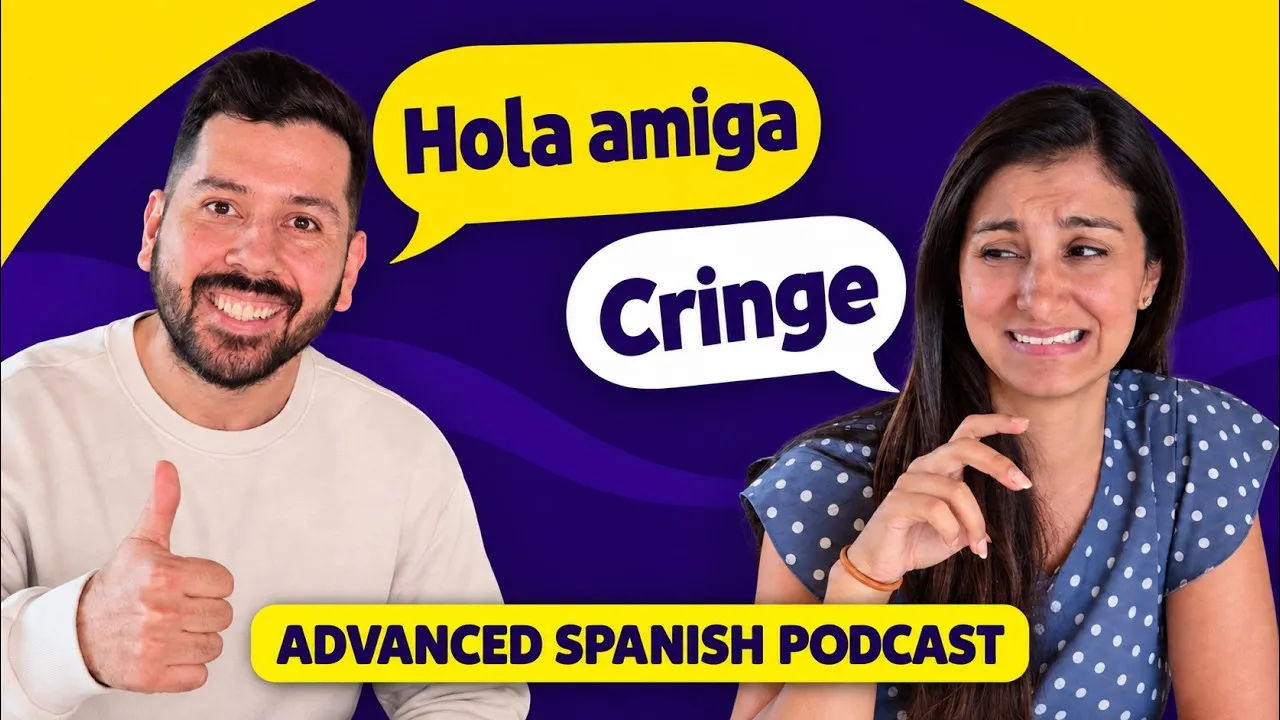
That's the question the three hosts of the WorldsAcross Spanish Podcast took on in this episode. They called it one of the most frustrating moments for anyone learning a language, and they see it with our members all the time. It's so common that when the team brought members to the WorldsAcross Experience, they made them T-shirts that said Háblame en español: talk to me in Spanish. Maybe people would at least read the shirt.
Here's the good news up front: most of the time, it has very little to do with your Spanish.
A "hello" on Margarita Island
One of the hosts remembers one of his first chances to use English. He was six or seven, on Margarita Island in Venezuela, a very touristy place. He spotted a man with his two kids who looked foreign to him, ran right up and said, proudly: "Hello!"
The man and the kids gave him a polite, slightly confused "hola". They were locals. They just looked the part.
Now flip it. Vicky traveled to Cancún with her partner, who is Argentine. His Spanish is native. People still kept answering him in English. "Amigo, es nativo", she laughed on the show. Buddy, he's a native speaker. It had nothing to do with his level. He's blond, so people guessed.
And it happened to the team, too. At a restaurant, a waiter greeted one host in Spanish, then turned to two friends at the table, both fluent Spanish speakers, with "Hello, how are you?" They answered "Estoy bien, estoy bien" (I'm fine, I'm fine), and the waiter kept going in English. A little awkward, right?
If a native Argentine can't get a Spanish reply in Cancún, the switch to English is probably not a grade on your grammar.
Why it happens: your level is the last layer
The hosts' main point was this: when someone answers you in English, there are a lot of layers before your level even enters the picture. Picture an onion. Your Spanish is at the very center. Here's what sits on top of it.
How you look. The first filter is a quick guess based on appearance: blond, probably English; looks Latino, hola. It's instinctive, and it works both ways. One host shared that a friend who worked in US restaurants would switch to Spanish when someone at the table looked Latino. The other hosts pushed back right away: "No, pero eso no lo puedes hacer". No, you can't do that. That person might feel offended. Everyone agreed it isn't right in either direction. They just agreed it's part of the explanation.
They want you to feel welcome. This one surprises learners. For a lot of native speakers, the first thought isn't "your Spanish is bad". It's "I want this person to feel at home here and have a great time". Switching to English feels like hospitality to them.
They're at work. In tourism and restaurants, staff are often expected to communicate clearly with visitors in English. And some things can't go wrong. Imagine a waiter double-checking a food allergy. They'll pick the language that leaves no doubt.
The conversation isn't flowing. Sometimes it really is about the moment, not about you. If a conversation is getting stuck and the other person speaks English, they may switch just so it moves. Nothing personal.
They want to practice their English. The hosts called this the elephant in the room. That kid on Margarita Island wanted to show off his English, and plenty of adults do too. One host remembers teaching English to younger kids in Mérida, Venezuela, as a teenager. An American was there traveling Latin America by motorcycle, and he wanted to practice his Spanish. But the host wanted to practice English every time he saw him. So the American spoke English, because he could tell how excited the kid was. In smaller cities, meeting an English speaker can feel rare and exciting. Your Spanish practice is their English practice.
And it's not just Spanish. The hosts joked that nobody learns English in Miami, because you show up ready to practice and everyone speaks Spanish to you.
So should you insist? Depende
This is where the hosts didn't fully agree, and that's the useful part.
Juan's take: say what you want. He remembers a friend, an English speaker with good Spanish, who would simply say, "No, en español. Quiero hablar en español." No, in Spanish. I want to speak Spanish. Set the expectation and people adjust. It takes a bit of personality, he admitted. You have to be willing to say it in front of a group.
Osmel liked the advice but added a condition: know how far your Spanish can carry you. If you can handle the opening small talk but you're about to spend a whole weekend with a group of native speakers, forcing everything into Spanish can make the situation uncomfortable. Worse, you can end up feeling isolated, because you're not following and not really part of it.
The third host went further: the native speaker is not your teacher. Some people have endless patience and will help you find the word when you get stuck. Others get frustrated. Plenty of learners have told the hosts they're learning because their husband or wife speaks Spanish and doesn't have the patience to teach them. If your spouse doesn't, imagine a stranger. And most native speakers have never asked themselves the difference between ser and estar. Ask them and you'll get the classic answer: "Ser es porque soy y estar es porque estoy." It's ser because I am, and estar because I am. Very helpful. Thanks.
So who's right? It depends on the moment.
- Ask for Spanish when it's a short, relaxed exchange, the other person seems happy to chat, and you can keep up.
- Let it go to English when someone is busy at work, when the details really matter, or when it's a long group situation that's beyond your level right now. That's not giving up. That's reading the room.
One more thing the hosts pointed out: there are worse scenarios. Sometimes a native speaker doesn't understand you and doesn't speak English either, because their ear isn't used to a foreign accent. It happens to them in English, too. Patience on both sides.
Two things to try next time
1. Say it up front, kindly. Before the switch happens, tell people you'd like to practice. A few lines you can use:
- Quiero practicar mi español. I want to practice my Spanish.
- ¿Podemos seguir en español? Can we keep going in Spanish?
- Más despacio, por favor. Slower, please.
- ¿Cómo se dice…? How do you say…?
- Si me pierdo, te aviso. If I get lost, I'll tell you.
2. Don't take it personally, and read the room. If the person keeps going in English, or they're clearly busy, go back to the default and save your practice for the next conversation. As the hosts put it, it's normal to hear the switch as a criticism of your Spanish. It almost never is.
If the switch to English stings because you understand a lot but freeze when it's your turn to talk, that's a different problem, and it's very common. We wrote about it here: you understand Spanish but can't speak it.
The hosts closed with a joke worth keeping: when a Spanish speaker visits your English-speaking country, answer them in English. Just so they can practice.
Your turn
Has someone answered you in English? What did you do in that moment? Before your next coffee order, pick the one sentence above you'll say first, and say it out loud right now.
Watch or listen to the full episode on the WorldsAcross YouTube channel.